

Arabica coffee beans are the seeds of the Coffea arabica plant, and they are the foundation of most of the specialty coffee you drink today. If you care about flavor, digestive comfort, and steady energy, understanding this bean helps you buy with confidence. This guide explains what makes arabica special, how it compares with robusta, and how to choose a blend that fits your day.
Quick answer: Arabica is a coffee species prized for smooth, sweet, aromatic flavor and lower bitterness than robusta. A bag labeled "100% arabica" contains only this species. Roast, freshness, and sourcing then decide how good the cup tastes.
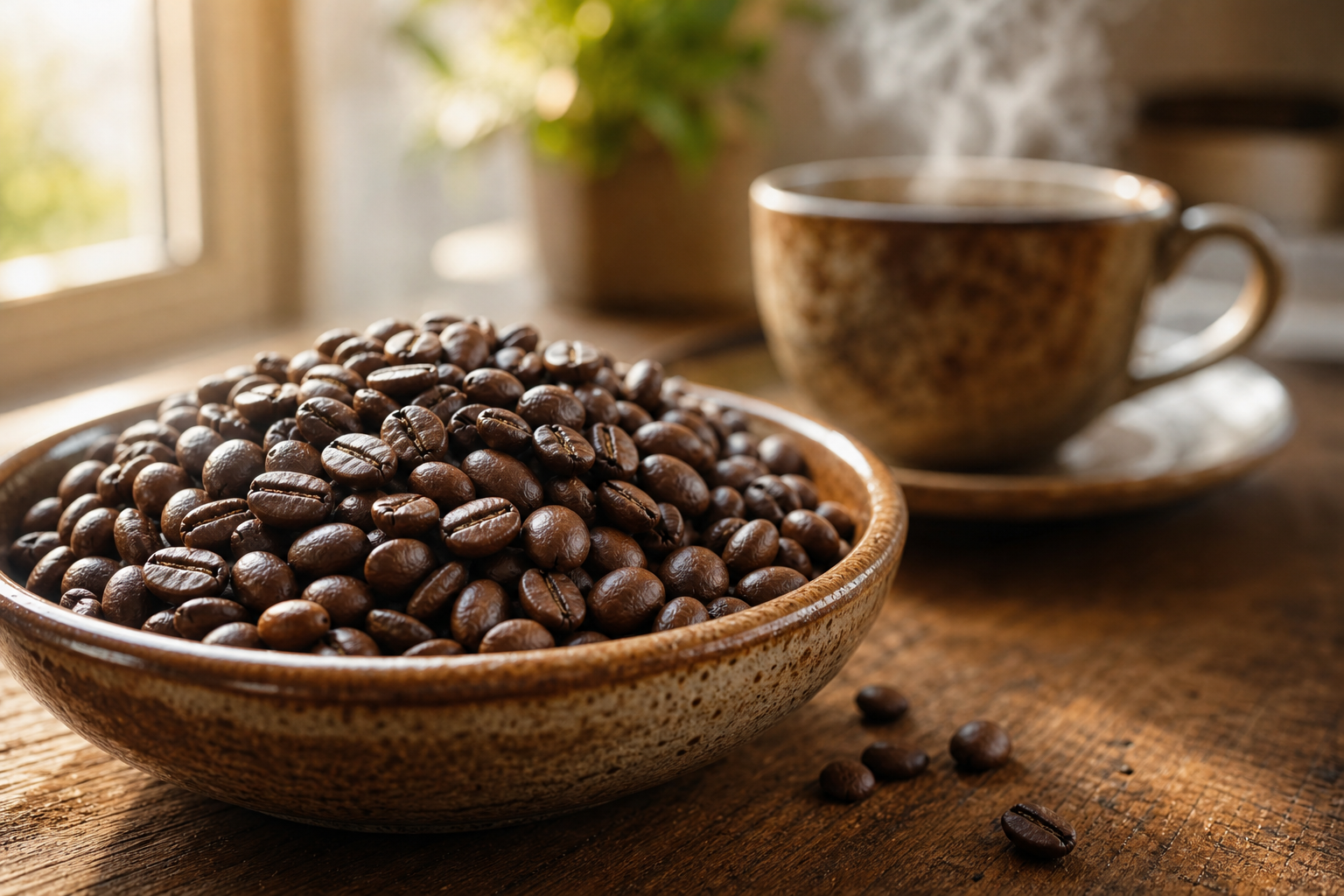
Freshly roasted arabica coffee beans are the starting point for a smooth, balanced cup.
What Are Arabica Coffee Beans?
Arabica coffee beans come from Coffea arabica, one of the two main commercial coffee species. According to Wikipedia's overview of Coffea arabica, it is the most widely cultivated coffee species worldwide. It originated in the highlands of Ethiopia.
The plant prefers cool, high-elevation climates. As a result, it grows slowly and develops complex flavors. Those flavors often include notes of fruit, nuts, chocolate, and caramel.
Arabica vs. Robusta: Key Differences
The other major species is Coffea canephora, known as robusta. The two differ in taste, caffeine, and growing needs. Here is a quick comparison.
| Trait | Arabica | Robusta |
|---|---|---|
| Flavor | Smooth, sweet, aromatic | Harsher, more bitter |
| Caffeine | Lower on average | Higher on average |
| Growing climate | Cool, high elevation | Warm, lower elevation |
| Typical cost | Usually higher | Usually lower |
Are Arabica Coffee Beans Easier on Your Stomach?
Arabica is not automatically low acid. However, its gentler, less bitter profile often feels more comfortable than harsher coffee. Roast level, brewing method, and added ingredients also play a part.
For example, dark roasts tend to taste smoother. In addition, some brands formulate blends specifically for digestive comfort. Sensitivity varies by person, so a gentler cup is a reasonable goal rather than a guarantee.
How to Choose High-Quality Arabica Beans
Good coffee starts with a few simple checks. Follow these steps when you shop.
- Confirm the label says 100% arabica. A plain "coffee" label may include robusta.
- Pick a roast level. Choose medium for balance and brightness, or dark for a bolder, smoother cup.
- Decide on whole bean or ground. Whole bean stays fresh longer, while ground saves time.
- Look for sourcing and testing details. Named sources and third-party lab results make quality easier to verify.
- Match the blend to your goal. Think about comfort, energy, or an evening decaf.
Roast Levels and Formats
Roasting changes how arabica tastes. Lighter roasts keep more brightness. Darker roasts bring out deeper, toastier notes and a rounder body.
Format matters too. Whole bean preserves aroma until you grind. By contrast, ground coffee gets you to your first sip faster, which suits busy mornings and office kitchens.
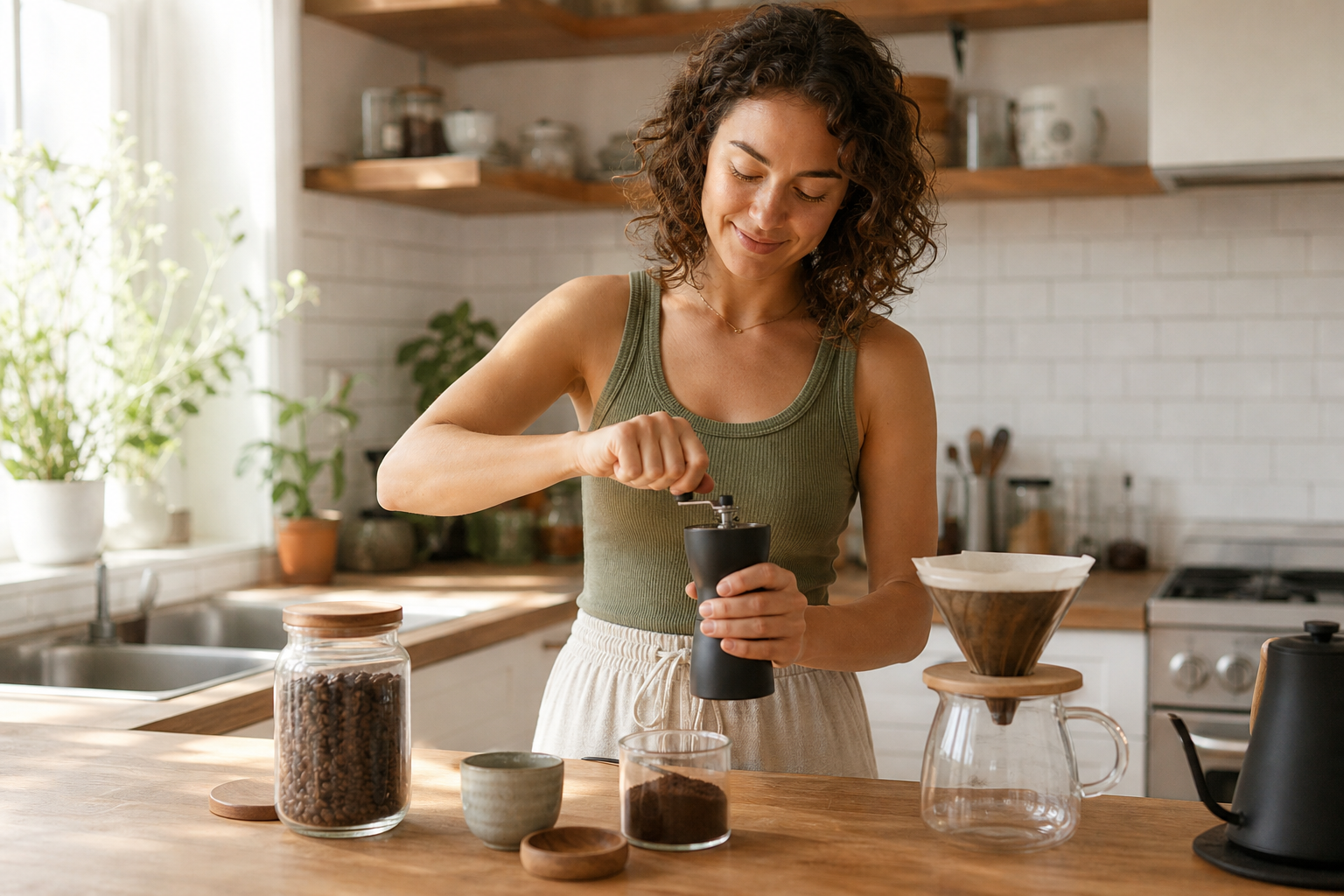
Grinding whole arabica coffee beans just before brewing helps preserve aroma.
Functional Coffee Built on 100% Arabica
Some brands start with arabica and add more. Tieman's makes low-acid Fusion Coffee from 100% arabica coffee beans. Its proprietary Fusion Process brews whole ceremonial grade matcha, rooibos, and goji berry into every cup, rather than adding powders afterward.
The ingredients have named sources. The matcha comes from Aiya, a Japanese producer operating since 1888. The rooibos comes from Khoisan Gourmet in South Africa's Western Cape. A family-owned U.S. roaster with more than 100 years of experience roasts the coffee.
Blends are also tested by third-party labs, including Brunswick Labs, for antioxidants, minerals, and pH. The goal is steady energy without jitters or a crash, plus easier digestion for athletes, professionals, and wellness-minded drinkers.
Blends to Explore
- Dark Fusion whole bean for grinding at home.
- Semi-Dark Decaf Fusion ground for afternoons and evenings, at $12.99 per bag.
- Dark whole bean 6-pack to stock up, with free shipping on six-bag orders.
- Semi-dark decaf 6-pack for a steady decaf supply.
You can also browse the full Tieman's page for more details. Single bags start at $11.99 for medium ground when bought direct.
Storing Your Beans for Freshness
Air, light, heat, and moisture dull coffee quickly. Therefore, keep your bag sealed and store it in a cool, dark cupboard. For general background on the plant and its history, the International Coffee Organization offers helpful industry resources.
Frequently Asked Questions
What are arabica coffee beans?
Arabica coffee beans come from the Coffea arabica plant, the most widely grown coffee species in the world. They are known for smoother, sweeter, and more aromatic flavor than robusta.
Are arabica coffee beans low in acid?
Not automatically. Arabica has a bright flavor profile, but actual acidity in the cup depends on roast, brewing, and any ingredients blended in. Dark roasts and specially formulated blends tend to taste gentler.
What is the difference between arabica and robusta?
Arabica is generally smoother and more aromatic, while robusta is harsher, more bitter, and higher in caffeine. Robusta is also hardier and cheaper to grow.
Does 100% arabica mean better coffee?
It signals a particular species, not guaranteed quality. Freshness, roast skill, and sourcing still shape the final cup.
Do arabica coffee beans have less caffeine?
Yes, on average arabica contains less caffeine than robusta. Exact amounts vary by bean, roast, and brew method.
Where are arabica beans grown?
They grow in tropical highland regions across Latin America, East Africa, and Asia. Cooler temperatures and higher elevations suit the plant.
Which roast is best for arabica beans?
There is no single best roast. Medium roasts keep more brightness, while dark roasts taste bolder and smoother.
Is whole bean arabica better than ground?
Whole beans stay fresh longer because less surface is exposed to air. Ground coffee is more convenient, and a well-sealed bag still makes a good cup.
How should I store arabica coffee beans?
Keep them in an airtight container away from light, heat, and moisture. Avoid storing them in the fridge, where odors and condensation can affect flavor.
How does Tieman's use arabica coffee beans?
Tieman's Fusion Coffee is made from 100% arabica coffee beans. Its proprietary Fusion Process brews ceremonial grade matcha, rooibos, and goji berry into every cup.
How much does arabica coffee cost?
Prices vary widely by origin and quality. Direct from Tieman's, single bags start at $11.99 for medium ground and $12.99 for semi-dark decaf ground.
Can I get decaf made from arabica?
Yes. Decaf versions exist, including Tieman's Semi-Dark Decaf Fusion, which uses arabica and is sold in ground form.
Conclusion
Arabica coffee beans offer smoother, sweeter, more aromatic coffee than robusta, but the best cup also depends on roast, freshness, and transparent sourcing. Check for "100% arabica," choose a roast and format you enjoy, and favor brands that name their ingredients and share lab testing. When you are ready to try a functional take on arabica, explore the Fusion blends at tiemans.com and find the one that fits your routine.
