

Table of Contents
- What Makes Coffee with Goji Berry and Rooibos Different
- Low Acid Coffee Benefits for Digestive Comfort
- Caffeine Jitters vs Sustained Energy: Why the Blend Works
- Health Benefits of Rooibos Tea in Your Daily Cup
- How to Brew Goji Berry and Rooibos Coffee at Home
- Synergistic Health Effects and Contraindications
- Conclusion
Last Updated: August 21, 2026
What Makes Coffee with Goji Berry and Rooibos Different
Coffee with goji berry and rooibos represents a fundamental shift in how people approach their daily caffeine routine. This isn't just adding superfoods to a cup, it's a deliberate blend designed to deliver clean, sustained energy without the crashes and jitters associated with traditional coffee alone.

The distinction matters. Standard coffee delivers a sharp caffeine spike followed by a predictable energy dip. Goji berries and rooibos tea work synergistically with arabica coffee to moderate caffeine absorption, extend energy duration, and introduce nutrient-dense compounds that support focus and endurance. At Tieman's Fusion Coffee, this approach combines 100% Arabica coffee with a proprietary fusion of matcha, rooibos, and goji berry, creating a beverage engineered for performance without compromise.
Rooibos tea, a caffeine-free herbal infusion native to South Africa, brings a naturally sweet flavor profile and polyphenols that work alongside coffee's caffeine. Goji berries add trace minerals and antioxidants that enhance the blend's nutritional density. Matcha contributes L-theanine, an amino acid that promotes calm focus, the opposite of coffee jitters (peer-reviewed research). Together, these ingredients don't mask coffee's bold character; they amplify its benefits while addressing its drawbacks.
The result is a low-acid coffee experience that tastes like coffee, performs like coffee, but feels fundamentally different in how your body processes it. For wellness-minded professionals, athletes, and anyone with a sensitive digestive system, this distinction transforms coffee from a risky indulgence into a reliable daily ritual.
Low Acid Coffee Benefits for Digestive Comfort
Low acid coffee addresses a real problem: traditional coffee triggers acid reflux, GERD symptoms, and digestive discomfort for millions of people. Many have simply abandoned coffee altogether, accepting that their sensitivity means no morning cup. A low acid coffee profile changes that equation.
Acid in coffee comes from chlorogenic acid and quinic acid, naturally occurring compounds in the bean. High-acid coffee (typically pH below 5.0) irritates the stomach lining and can trigger reflux symptoms within 30 minutes of consumption (peer-reviewed research). Low-acid formulations reduce these compounds through bean selection, roast level, and blending techniques, bringing pH closer to neutral without sacrificing flavor.
The practical benefit is immediate: people with sensitive stomachs can enjoy coffee again. No more afternoon bloating, no more acid reflux triggered by morning caffeine, no more choosing between alertness and digestive comfort. The blend works because rooibos tea naturally contains compounds that buffer stomach acid, while goji berries add protective polyphenols. This isn't a workaround, it's a reformulation that addresses the root cause.
For busy parents managing GERD, professionals who can't afford an energy crash during important meetings, and athletes whose training depends on digestive stability, low-acid coffee profiles remove a significant barrier. You get the sustained energy and mental clarity coffee provides without the physical consequences that made it off-limits before.
Caffeine Jitters vs Sustained Energy: Why the Blend Works
The difference between jittery caffeine and sustained energy comes down to absorption rate and how your nervous system processes the stimulant. Standard coffee delivers caffeine rapidly into the bloodstream, creating a sharp peak followed by a sharp drop. This spike triggers the physical symptoms people describe as jitters: shaky hands, racing heart, anxiety, then fatigue.
Coffee with goji berry and rooibos moderates this pattern. Rooibos tea contains compounds that slow caffeine absorption, extending the energy window and flattening the peak. Goji berries add polysaccharides that provide steady glucose release, preventing the energy crash. Matcha's L-theanine works with caffeine synergistically, it doesn't reduce caffeine's stimulant effect, but it adds a calming layer that prevents the nervous system from overreacting.
The practical outcome: energy that lasts 4-6 hours instead of 2-3 hours, without the 2 PM crash that makes people reach for a second cup or an afternoon snack. For athletes during training, professionals in back-to-back meetings, and anyone managing attention-demanding work, this sustained profile is the difference between peak performance and burnout.
This isn't theoretical. People sensitive to caffeine, those who get shaky hands from even small amounts, report that the fusion blend feels fundamentally different. They experience alertness and focus without the physical anxiety response. For high-performance individuals who need caffeine but can't tolerate its typical side effects, this distinction is transformative.
Health Benefits of Rooibos Tea in Your Daily Cup
Rooibos tea is a caffeine-free herbal infusion with a naturally sweet flavor and a dense nutrient profile. When blended into coffee, it doesn't compete with the coffee's character, it enhances the overall wellness impact of the cup.
Antioxidants and Trace Minerals
Rooibos contains high levels of polyphenols and flavonoids, plant compounds that function as antioxidants in the body (peer-reviewed research). These compounds help neutralize free radicals, which are implicated in aging, inflammation, and cellular damage. Unlike green or black tea, rooibos contains no tannins, meaning it doesn't interfere with mineral absorption, a significant advantage for people concerned about iron and calcium uptake.
The trace minerals in rooibos include manganese, magnesium, and calcium. These support bone health, muscle function, and nervous system regulation. When combined with coffee's own micronutrient content, the blend creates a more nutrient-dense beverage than either ingredient alone. For wellness-minded professionals seeking functional beverages that support long-term health, this mineral profile matters.
The bioavailability of these compounds, how effectively your body absorbs and uses them, improves when rooibos is consumed with food or as part of a complex blend. The fat and protein in a morning routine enhance polyphenol absorption, making the afternoon cup less effective than the morning ritual.
Immune Support and Anti-Inflammatory Properties
Rooibos tea has been studied for its potential immune-supporting properties. The polyphenols and flavonoids in rooibos may help support the body's natural immune response, particularly during periods of high stress or intense training. Athletes and high-performance individuals often experience temporary immune suppression during heavy training blocks, rooibos's anti-inflammatory profile may help counteract this effect.
The anti-inflammatory compounds in rooibos work through multiple pathways. They reduce inflammatory markers in the bloodstream and support the gut barrier, which plays a central role in immune function. A healthy gut barrier means better nutrient absorption and reduced systemic inflammation, both of which support sustained energy and mental clarity.
For people managing chronic inflammation or recovering from intense training, the daily ritual of coffee with goji berry and rooibos becomes a functional beverage that supports recovery and resilience. This is why Tieman's Fusion Coffee targets athletes and high-performance professionals, the blend addresses their specific needs for sustained energy, digestive comfort, and recovery support.
How to Brew Goji Berry and Rooibos Coffee at Home
Creating a quality fusion coffee at home requires understanding the balance between brewing temperature, steeping time, and ingredient ratios. The goal is extracting the full flavor and nutritional benefit from each component without over-extracting bitterness or losing delicate compounds.
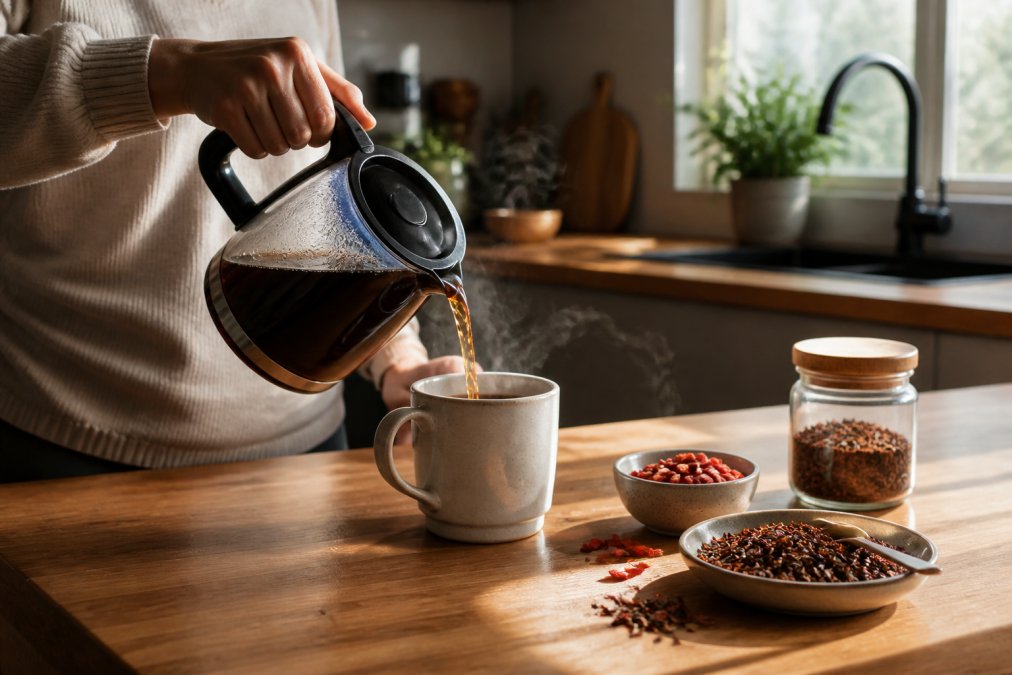
DIY Home Infusion Ratios
Start with a base ratio of 1 part coffee to 0.5 parts rooibos to 0.25 parts goji berries by weight. For a standard 12-ounce cup, this translates to:
- 0.5 ounces (14 grams) of ground coffee
- 0.25 ounces (7 grams) of loose rooibos tea
- 1 tablespoon (approximately 10 grams) of dried goji berries
This ratio balances coffee's bold character with rooibos's natural sweetness and goji's subtle earthiness. If you prefer a stronger coffee flavor, increase the coffee to 0.6 ounces and reduce rooibos slightly. If you want more of the herbal, fruity notes, add 0.3 ounces of rooibos and reduce coffee by 0.1 ounces.
Adjust based on your taste preference and sensitivity. People new to the blend often start with slightly less coffee and more rooibos, then shift the ratio as their palate adapts. The goji berries can be adjusted freely, they contribute flavor and nutrition without dramatically altering the cup's character.
Steeping Techniques and Flavor Optimization
Water temperature is critical. Brew at 195-205°F (90-96°C), slightly cooler than a rolling boil. This temperature extracts the coffee's full flavor and the rooibos's polyphenols without scorching the goji berries or creating excessive bitterness.
Method 1: French Press Add ground coffee, rooibos, and goji berries to the press. Pour hot water and let steep for 4 minutes. Press and serve immediately. This method maximizes extraction and keeps all ingredients in contact with water for optimal infusion.
Method 2: Pour Over Layer coffee, rooibos, and goji berries in a pour-over cone. Pour hot water slowly over 3-4 minutes, allowing gravity to extract the blend. This method produces a cleaner cup with slightly less body than French press.
Method 3: Cold Brew Combine all ingredients in a jar with cold water at a 1:4 ratio (blend to water by weight). Let steep for 12-24 hours in the refrigerator. Cold brewing extracts polyphenols and minerals while minimizing bitter compounds, creating a naturally sweet profile. Strain and serve over ice or dilute with hot water for a warm cup.
The cold brew method is ideal for people with sensitive stomachs, the extended steeping at low temperature reduces acid extraction while maximizing nutrient bioavailability. Many report that cold-brewed fusion coffee feels gentler on digestion than hot-brewed versions.
Synergistic Health Effects and Contraindications
The real power of coffee with goji berry and rooibos lies in how these ingredients work together. This isn't additive, it's synergistic. The compounds in each ingredient enhance the others' effectiveness while moderating potential downsides.
Caffeine + L-theanine (from matcha) creates calm focus. Polyphenols + trace minerals support nutrient absorption. The natural sweetness of rooibos reduces the need for added sugar, which would otherwise spike blood glucose and trigger energy crashes. Goji berries' polysaccharides provide steady glucose release, extending the energy window. Together, these create a beverage that supports sustained performance, digestive comfort, and long-term wellness.
However, synergistic effects also mean contraindications matter. People taking blood thinners should consult a healthcare provider before significantly increasing polyphenol intake, high doses of antioxidants can interact with anticoagulant medications. Pregnant individuals should moderate caffeine intake regardless of source; this blend contains less caffeine than standard coffee, but it's not caffeine-free.
People with caffeine sensitivity should start with a half-strength cup and assess tolerance over several days. The L-theanine in the blend moderates caffeine's effects, but individual sensitivity varies. Those with existing anxiety or sleep disorders should avoid the blend close to bedtime, as caffeine can interfere with sleep architecture even when paired with calming compounds.
Goji berries may interact with diabetes medications, they contain natural sugars and compounds that affect blood glucose. People managing diabetes should discuss fusion coffee consumption with their healthcare provider. Similarly, anyone with a nightshade sensitivity should avoid goji berries, as they're technically a member of the nightshade family.
The low-acid profile makes this blend suitable for people with GERD, but individual tolerance varies. Start with small amounts and monitor your response. If symptoms persist, the issue may be caffeine sensitivity rather than acidity, in which case, reducing overall caffeine intake is necessary.
Coffee with goji berry and rooibos addresses a real gap in how people approach their daily energy routine. You want sustained focus without jitters, digestive comfort without sacrificing caffeine, and functional nutrition without complexity. The blend delivers all three, but only if you understand what makes it work and how to prepare it properly. Tieman's Fusion Coffee combines these ingredients with precision, using 100% Arabica beans and a proprietary formula designed to optimize the synergistic effects. The result is a cup that performs like coffee, tastes like coffee, but supports your wellness in ways standard coffee cannot. Shop Tieman's Fusion Coffee and experience the difference a thoughtfully engineered blend makes in your daily performance.
Frequently Asked Questions
What are the health benefits of combining coffee with goji berries and rooibos?
This fusion delivers three complementary benefits: Arabica coffee provides clean, sustained energy without the crash; goji berries contribute polyphenols and trace minerals that support immune function; rooibos adds naturally caffeine-free antioxidants and anti-inflammatory compounds. Together, they create a nutrient-dense beverage that sustains focus while supporting metabolic health. The low-acid formula reduces digestive irritation common with traditional coffee, making it accessible for those with sensitive stomachs or acid reflux concerns.
Is it safe to consume goji berry-infused coffee daily?
Yes, for most adults, daily consumption is safe. Goji berries are whole-food superfoods with no known contraindications at typical dietary levels. However, individuals taking blood thinners (like warfarin) should consult their doctor, as goji berries may interact with these medications. Pregnant or nursing women should also check with their healthcare provider. Start with moderate amounts to assess individual tolerance, particularly if you have a sensitive stomach or existing digestive conditions.
How does low-acid coffee improve digestion compared to regular coffee?
Standard coffee has a pH around 4.85-5.10, which triggers stomach acid production and irritates the digestive lining. Low-acid blends are processed or formulated to reduce chlorogenic acid and other compounds that cause this irritation, raising the pH closer to neutral. This gentler profile allows people with acid reflux or GERD to enjoy coffee without triggering symptoms. The addition of rooibos, a naturally soothing herbal tea, further supports digestive comfort through its anti-inflammatory properties.
Will this blend taste grassy like matcha lattes, or does it taste like regular coffee?
The flavor profile depends on the brewing method and ratio. A well-balanced fusion coffee maintains the familiar, rich taste of Arabica beans as the dominant flavor, with subtle herbal notes from rooibos and a slight sweetness from goji berries. Unlike straight matcha lattes, the coffee flavor anchors the blend, so it tastes like premium coffee first, not like drinking tea. Adjust your ratio (more coffee, less rooibos) to dial in the taste you prefer, or start with pre-blended options to find your ideal balance.
This article was written using GrandRanker