

Dark roast coffee is coffee roasted longer and at higher temperatures until the beans turn deep brown and develop bold, toasty flavors. If you love a rich cup but your stomach or nerves do not always love it back, the roast level is a good place to start. This guide explains how dark roast tastes, how much caffeine it really has, and how to brew it well.
Quick answer: Dark roast coffee is bold, smoky, and usually lower in acid than lighter roasts. Its caffeine is about the same as other roasts. Fresh beans, the right grind, and water just off the boil make the biggest difference in the cup.
What Is Dark Roast Coffee?
Dark roast coffee is made by roasting green coffee beans past the "second crack," the point where the beans audibly pop a second time and release oils. The roast flavors take center stage. Think cocoa, toasted sugar, and a gentle smokiness.
Light roasts keep more of the bean's origin character, such as fruit and floral notes. Dark roasts trade some of that brightness for body and depth. For a broader look at how roasting works, see the overview of coffee roasting on Wikipedia.
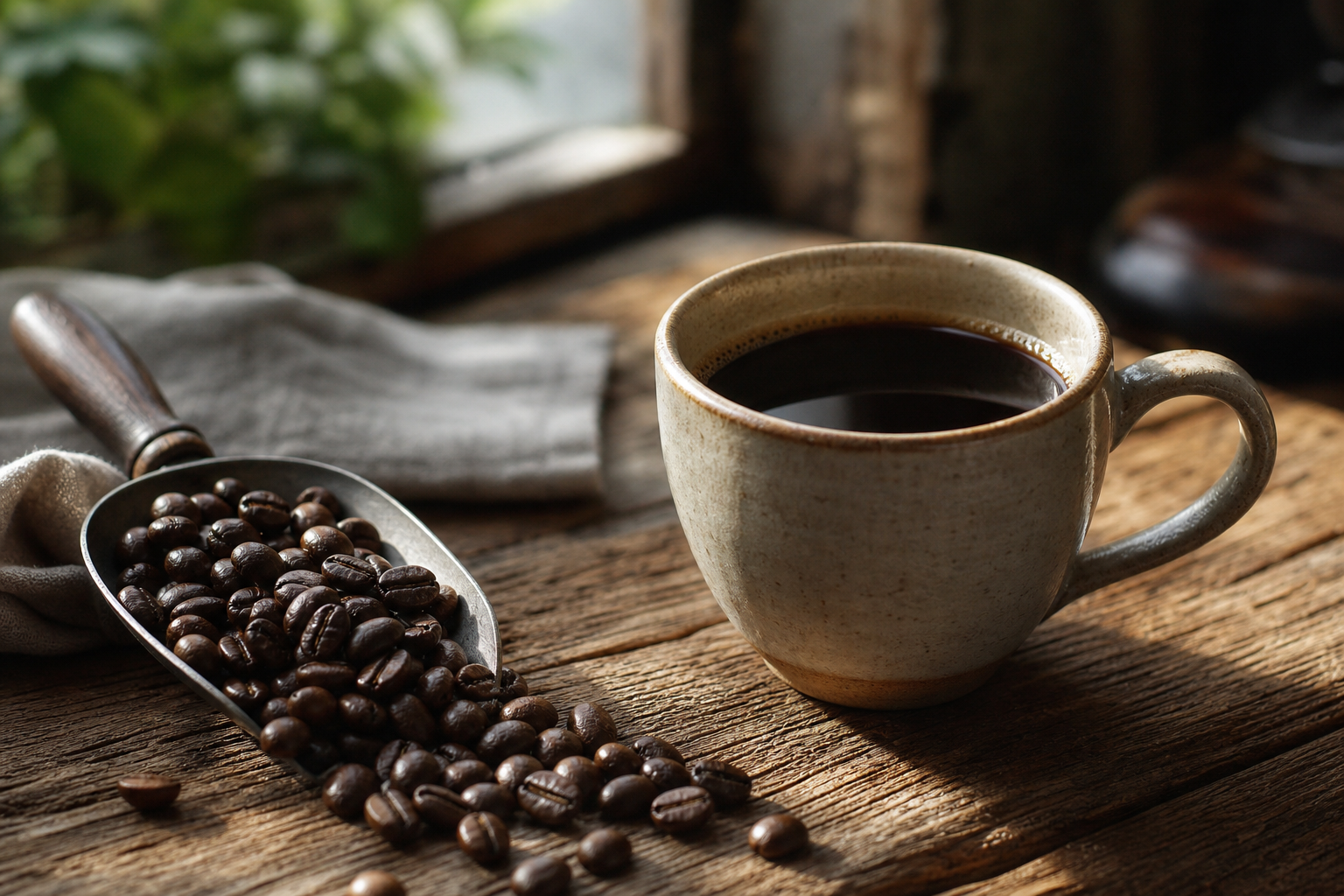
A fresh cup of dark roast coffee brings out deep cocoa and toasted-sugar notes.
How Dark Roast Tastes Compared With Other Roasts
Taste is the main reason people choose a darker roast. The table below shows the general pattern. Individual beans and roasters vary.
| Trait | Light | Medium | Dark |
|---|---|---|---|
| Flavor | Bright, fruity | Balanced, nutty | Bold, smoky, cocoa |
| Acidity | Higher | Moderate | Lower |
| Body | Light | Medium | Full |
Caffeine in Dark Roast: Myth vs. Reality
Many people assume a bold cup means more caffeine. However, that is a myth. Roasting changes the bean's size and density, not its caffeine in any major way.
Dark beans are lighter and puffier, so a scoop holds slightly fewer beans. As a result, a scoop of dark roast can contain a little less caffeine than a scoop of light roast. By weight, the difference is small.
Jitters often come from other factors. For example, drinking a large cup on an empty stomach can make anyone feel wired. Pairing coffee with food and choosing a smoother blend can help.
Is Dark Roast Easier on Your Stomach?
For many people, yes. Longer roasting breaks down some of the acidic compounds in the bean, so a dark roast tends to taste smoother and feel gentler. Brewing method matters too, since cold brew and French press can also reduce perceived acidity.
That said, "low acid" is not a guarantee for everyone. If coffee bothers you, pay attention to how each cup feels and talk with a healthcare professional if discomfort continues. For a deeper comparison, read this guide to low-acid whole bean dark roast coffee brands.
A Functional Take: Dark Fusion Coffee
Tiemans.com offers a functional twist on a dark roast. Tieman's Dark Fusion starts with 100% Arabica coffee. Its proprietary Fusion Process then brews whole superfoods into the coffee: ceremonial grade matcha, rooibos, and goji berry.
The ingredients are named and traceable. The matcha comes from Aiya, a Japanese producer operating since 1888. The rooibos comes from Khoisan Gourmet in South Africa's Western Cape. A family-owned U.S. roaster with more than 100 years of experience roasts the beans.
The blends are tested by third-party labs, including Brunswick Labs, for antioxidants, minerals, and pH. The coffee also contains naturally occurring magnesium, potassium, iron, and zinc. You can review the details on the lab results page.
It is available as whole bean or ground. If you want to stock up, the Dark Whole Bean 6-pack ships free. Learn more about the brand at tiemans.com.
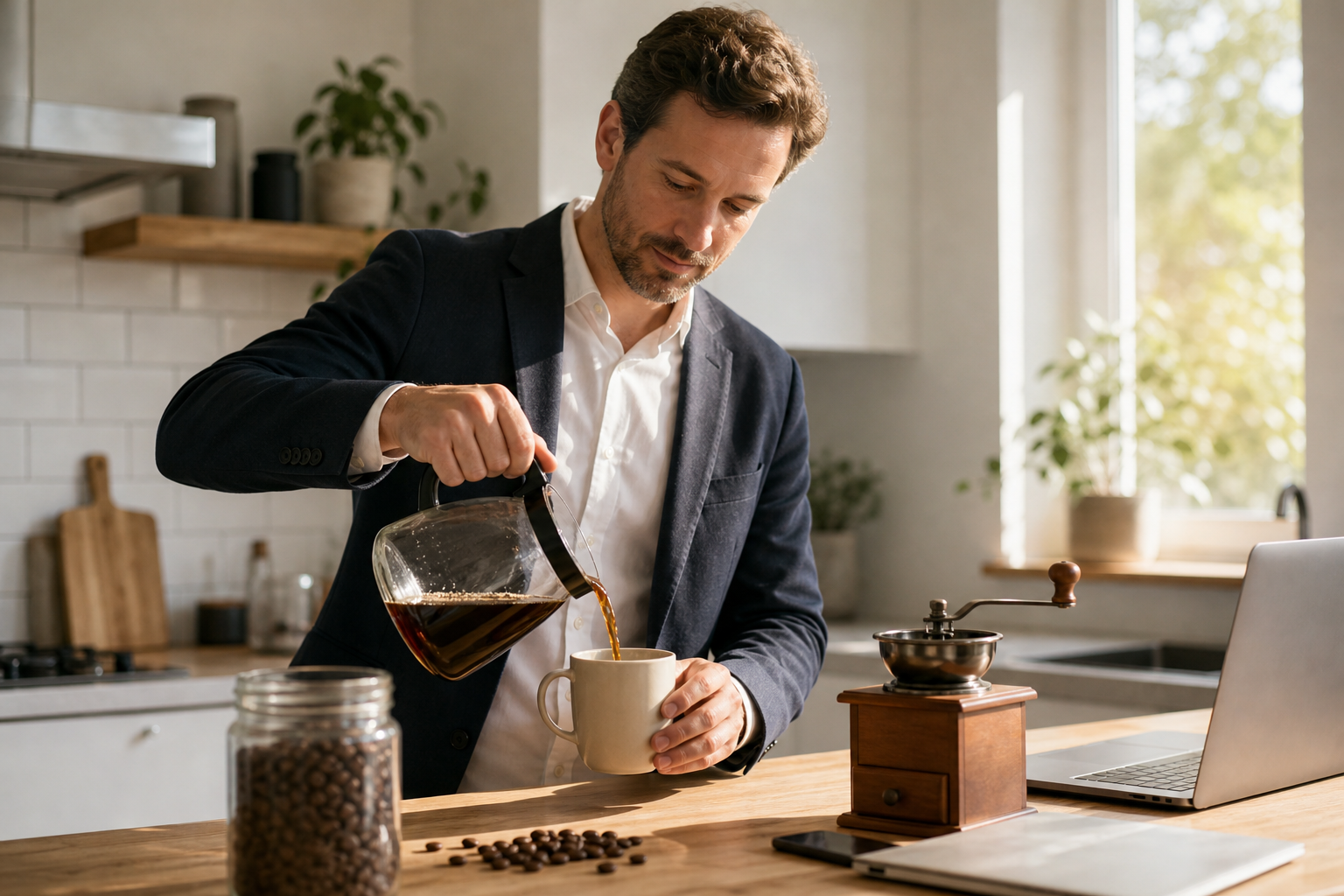
A calm morning routine pairs well with a smooth, low-acid cup.
How to Brew Dark Roast Coffee Step by Step
Dark beans extract quickly, so small changes matter. Follow these steps for a balanced cup.
- Measure your coffee. Use about two tablespoons per six ounces of water, then adjust to taste.
- Grind to medium. If using whole beans, grind just before brewing, to the texture of coarse sand.
- Heat the water. Aim for 195 to 205°F. Let boiled water rest briefly.
- Brew for about four minutes. Keep the grounds evenly saturated.
- Serve right away. Avoid a hot plate, which can make coffee taste burnt.
Whole Bean or Ground Dark Roast?
Whole bean keeps its aroma longer and lets you set the grind. Ground saves time on busy mornings. In either case, store the coffee in an airtight container away from light and heat. Dark roasts are oilier, so air exposure dulls them faster.
Frequently Asked Questions
What is dark roast coffee?
Dark roast coffee is coffee roasted longer and hotter than light or medium roasts. The result is a bolder, smokier, less acidic cup with a deep brown color.
Does dark roast coffee have more caffeine?
No. Roasting changes bean density, not caffeine in any big way. Measured by scoop, dark roast can have slightly less caffeine than light roast; measured by weight, they are nearly the same.
Is dark roast coffee lower in acid?
Generally, yes. Longer roasting breaks down some acidic compounds, which is why many people find dark roast easier on the stomach. Bean type and brewing method also matter.
Why does dark roast taste bitter?
Long roasting caramelizes and then carbonizes sugars, creating bold, bittersweet notes. Over-extraction from water that is too hot or a grind that is too fine adds more bitterness.
What is the best way to brew dark roast coffee?
Drip, French press, and pour-over all work well. Use water just off the boil, around 195 to 205°F, and a medium to medium-coarse grind.
Should I buy whole bean or ground dark roast coffee?
Whole bean stays fresh longer and lets you control the grind. Ground is faster and more convenient for busy mornings.
How is dark roast different from medium roast?
Medium roast keeps more of the bean's original character and brighter notes. Dark roast emphasizes roast flavors such as cocoa, toasted sugar, and smoke.
Is dark roast coffee good for sensitive stomachs?
Many people with sensitive stomachs prefer dark roast because it tends to be lower in acid. Individual responses vary, so pay attention to how you feel.
What makes Tieman's Dark Fusion different from regular dark roast coffee?
Dark Fusion is 100% Arabica dark roast coffee with ceremonial grade matcha, rooibos, and goji brewed in through a proprietary Fusion Process. It is low acid and third-party tested for antioxidants, minerals, and pH.
How should I store dark roast coffee?
Keep it in an airtight container away from light, heat, and moisture. Dark roasts are oilier, so avoid leaving them open to air.
How much does dark roast coffee cost?
Prices vary widely by quality and sourcing. Tieman's single bags start at $11.99 direct, and orders of six bags ship free.
What are common mistakes when brewing dark roast coffee?
The most common are water that is too hot, a grind that is too fine, and steeping too long. Each pushes the cup toward harsh bitterness.
Final Thoughts on Dark Roast Coffee
Dark roast coffee offers a bold, smooth, typically lower-acid cup, with caffeine similar to other roasts. Fresh beans, a medium grind, and well-timed brewing keep it rich rather than bitter. If you want a dark roast with added matcha, rooibos, and goji, explore Tieman's Dark Fusion Ground and shop now for your next steady, comfortable cup.
