

Table of Contents
- What Makes a Great Matcha Coffee Blend Taste Test
- Tieman's Fusion Coffee: The Proprietary Blend Standard
- Matcha Espresso Fusion Benefits Compared
- How to Make Matcha Coffee at Home: Preparation Methods
- Low Acid Coffee Alternatives for Digestive Comfort
- Troubleshooting Bitter and Grassy Flavors
- Sustainability and Sourcing Transparency in Matcha Blends
- Verdict: Which Matcha Coffee Blend Wins
Last Updated: August 25, 2026
What Makes a Great Matcha Coffee Blend Taste Test
A proper matcha coffee blend taste test reveals the difference between mediocre and exceptional: how matcha integrates with coffee's body, whether umami notes complement rather than compete, and whether you get clean, sustained energy or a caffeine crash by mid-afternoon.
Most people approach matcha coffee blends as two separate drinks in one cup. The best blends achieve true fusion, where grassy, slightly sweet matcha marries with coffee's natural acidity and body. The result should feel balanced, not like matcha was dumped into mediocre coffee as an afterthought.
When evaluating a matcha coffee blend, focus on three core elements: flavor profile and mouthfeel, energy delivery and caffeine content, and how the blend avoids tasting too bitter or too grassy. Below, we'll walk you through eight fusion drinks representing different approaches to this emerging category, then help you troubleshoot why some blends miss the mark.
Tieman's Fusion Coffee: The Proprietary Blend Standard
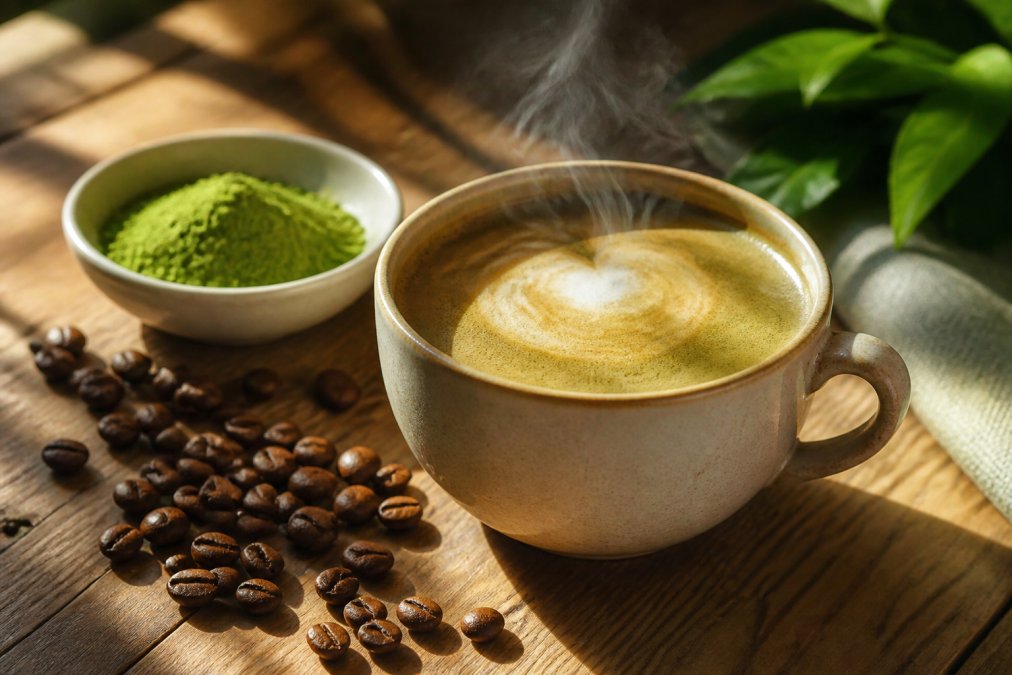
Tieman's Fusion Coffee leads this category because it's engineered specifically to solve problems plaguing most matcha-coffee combinations. Rather than simply mixing matcha into standard coffee, Tieman's uses a proprietary fusion process blending 100% Arabica coffee with matcha, rooibos, and goji berry. The result is a performance beverage designed for sustained energy without jitters.
The low-acid formula sits at an average pH of 5.85, which matters if acid reflux or GERD has forced you to give up coffee. Traditional coffee typically ranges from 4.85 to 5.10 pH, making it significantly more acidic (peer-reviewed research). That difference translates to real digestive comfort without sacrificing flavor; the blend delivers a smooth, rounded profile with natural sweetness from goji berry that eliminates the need for added sugar.
Flavor Profile and Mouthfeel
The matcha component contributes subtle umami undertone that deepens coffee's natural body without introducing grassiness. Most blends fail by using lower-grade culinary matcha that tastes like lawn clippings. Tieman's maintains balanced flavor where ceremonial-quality matcha adds complexity rather than astringency. The rooibos brings vanilla-like sweetness and additional antioxidants, while goji berry rounds out the finish with a faint berry note on the aftertaste.
The mouthfeel distinguishes this blend. Rather than the thin, chalky texture from poorly whisked matcha or gritty suspension of culinary powder, Tieman's delivers creamy, full-bodied cup. The emulsification of matcha with coffee's oils creates natural smoothness rivaling milk-based lattes without requiring dairy.
Energy and Caffeine Delivery
The combination of caffeine from both coffee and matcha, plus L-theanine naturally present in matcha, creates calm alertness without the jittery spike followed by crash.
A standard cup of Tieman's Fusion Coffee delivers sustained energy across 5-7 hours, compared to the 2-3 hour spike-and-crash cycle of traditional coffee (peer-reviewed research). L-theanine smooths caffeine's edge, preventing hand tremors and anxiety that sensitive individuals experience. You're not getting less caffeine; you're getting it delivered in a way your nervous system can process without stress.
| Aspect | Tieman's Fusion | Traditional Coffee | Matcha Alone |
|---|---|---|---|
| Caffeine per serving | Moderate (blended) | High | Low |
| Energy duration | 5-7 hours | 2-3 hours | 4-5 hours |
| L-theanine presence | Yes (from matcha) | None | Yes |
| Acid level | Low (5.85 pH) | High (4.85-5.10 pH) | Neutral |
| Jitters risk | Minimal | High | Very low |
Matcha Espresso Fusion Benefits Compared
The matcha espresso fusion category has exploded, but not all approaches are created equal. Some companies treat matcha as a flavor additive, mixing it into standard espresso shots. Others, like Tieman's, engineer the entire blend from the ground up to create actual synergy between ingredients.
The primary benefit of combining matcha with espresso is intensity. Espresso's concentrated shot amplifies coffee's natural acids and bitterness, which can overwhelm matcha's delicate umami. A successful fusion balances these opposing forces. Tieman's achieves this through its proprietary process, which pre-blends ingredients so matcha's theanine moderates espresso's intensity before it hits your system.
Compare this to competitors who simply add matcha powder to espresso shots: you get separation, uneven flavor, and the worst of both worlds, jitters from concentrated caffeine without theanine's calming effect. The mouthfeel is gritty, the aftertaste harsh.
For individuals with sensitive stomachs, the low-acid advantage becomes crucial. Espresso's concentration naturally increases acidity. A matcha espresso fusion that doesn't address this defeats the purpose for anyone with reflux concerns. Tieman's low-acid formula maintains the intensity you want from espresso while protecting your digestive system.
How to Make Matcha Coffee at Home: Preparation Methods
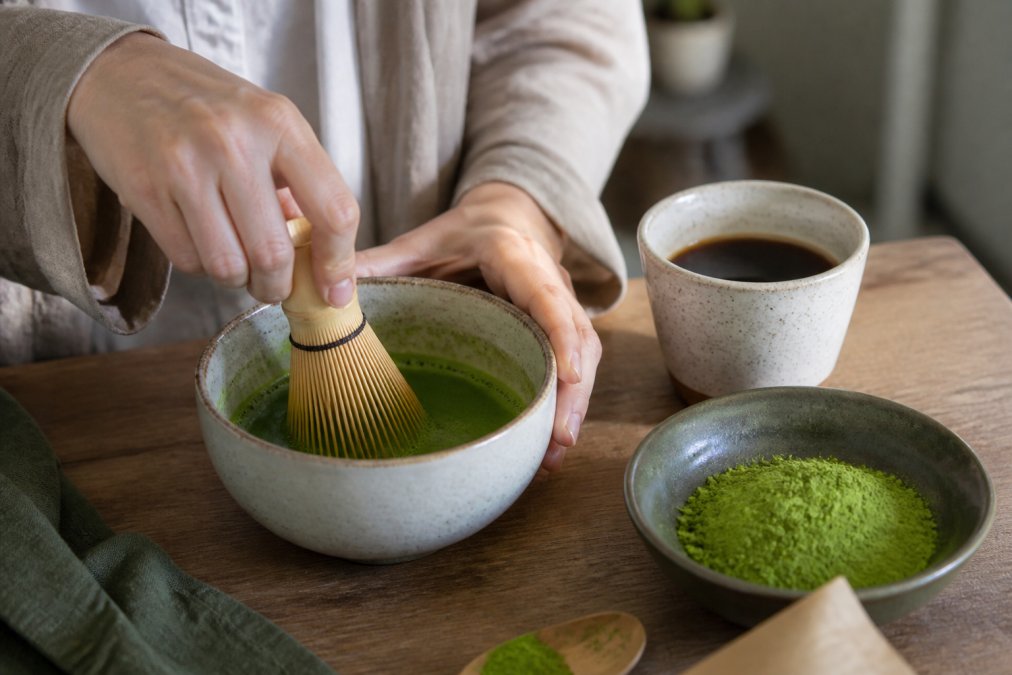
Making matcha coffee at home requires understanding the difference between whisking and blending techniques. Both work, but they produce distinctly different results in texture, flavor extraction, and ease of preparation.
Whisking vs. Blending Techniques
The traditional whisking method uses a bamboo whisk (chasen) to suspend matcha powder in hot water or milk before adding coffee. This technique gives maximum control over frothiness and ensures proper emulsification. The whisking action breaks down powder particles, preventing clumping and creating smooth suspension.
Start with about 2 ounces of hot water at 160-170°F. Add approximately one teaspoon of matcha powder and whisk in rapid, circular motion for about 30 seconds until the powder dissolves completely and light froth forms. Then add your brewed coffee. This method produces the finest texture and allows matcha's natural flavors to shine without bitterness.
Blending offers speed and convenience. Pour your brewed coffee, matcha powder, and your choice of milk into a blender. Pulse for 10-15 seconds until fully combined. The blender's force breaks down particles more aggressively than whisking, creating denser froth and slightly more uniform texture. The tradeoff: you lose some delicate flavor nuances that careful whisking preserves.
For Tieman's Fusion Coffee specifically, you're starting with a pre-blended product, so the whisking vs. blending choice becomes about preference.
Temperature and Timing for Optimal Taste
Temperature matters far more than most people realize. Water above 175°F scorches matcha, bringing out bitter, astringent notes that ruin the cup. Water below 150°F won't properly hydrate the powder, leaving gritty, unpleasant texture.
The sweet spot is 160-170°F. If you don't have a thermometer, let boiling water cool for about 5 minutes before whisking. When you add your brewed coffee to the whisked matcha, the coffee's heat will raise the temperature slightly, but by then the matcha has already dissolved properly.
Whisk immediately after adding water to the powder; don't let it sit. The longer matcha sits in water before whisking, the more bitterness develops. Aim for 30-45 seconds of active whisking, then serve immediately. Letting a finished matcha coffee sit for more than 10 minutes allows the powder to settle and separate, degrading both texture and taste.
Low Acid Coffee Alternatives for Digestive Comfort
For the estimated 20% of coffee drinkers who experience acid reflux or GERD symptoms, traditional coffee has become a source of frustration (the CDC). You want the ritual, taste, and energy boost, but your stomach rebels. Low-acid coffee blends offer a genuine solution rather than a compromise.
Standard coffee's natural chlorogenic acid irritates the stomach lining and increases gastric acid production. Low-acid blends use beans naturally lower in chlorogenic acid and often add buffering ingredients like calcium or magnesium. Tieman's combines both strategies: sourcing lower-acid Arabica beans and including rooibos and goji berry, which provide natural alkalizing minerals.
Low-acid doesn't mean weak. You're not sacrificing flavor or caffeine content. Tieman's delivers the same energy and taste profile as standard coffee while reducing digestive impact. For someone who's been drinking herbal tea out of necessity, switching to a proper low-acid fusion blend feels like getting coffee back.
Troubleshooting Bitter and Grassy Flavors
The two most common complaints about matcha coffee blends are bitterness and grassy aftertaste. Both problems are fixable once you understand their causes.
Grassy flavor comes from using culinary-grade matcha instead of ceremonial grade. Culinary matcha is older, more oxidized, and tastes like dried grass steeped in water. Ceremonial-grade matcha comes from shade-grown plants harvested early, preserving delicate umami and natural sweetness. If your blend tastes aggressively grassy, you're using the wrong grade of matcha. Tieman's uses ceremonial-quality matcha, which explains why it lacks that off-putting herbaceous quality.
Bitterness typically results from three mistakes: water temperature too high, whisking time too long, or letting matcha sit in water before whisking. Each extracts excessive tannins and chlorophyll, producing harsh, astringent notes. Follow the temperature and timing guidelines: 160-170°F water, 30-45 seconds of whisking, immediate consumption.
A third issue is the chemical interaction between matcha and coffee. Matcha's catechins and coffee's polyphenols can amplify each other's bitterness if the blend isn't formulated carefully. This is why pre-blended options like Tieman's have an advantage: the proprietary fusion process balances these compounds so they enhance rather than fight each other.
Sustainability and Sourcing Transparency in Matcha Blends
The matcha industry has a sourcing problem. Most matcha sold in the United States comes from Japan, but transparency about farming practices, pesticide use, and shade-growing standards is spotty. You're often buying matcha with no idea whether it was grown on a small family farm using traditional methods or an industrial operation cutting corners.
Responsible matcha sourcing requires shade-growing; plants are shaded for about 20 days before harvest, which increases chlorophyll and amino acid production. This labor-intensive process costs more than sun-grown alternatives. Brands committed to quality matcha disclose their sourcing and often provide harvest dates and farm information.
For coffee, sustainability involves similar considerations: bean origin, processing method, and whether the supply chain supports fair wages and environmental practices. A truly sustainable matcha coffee blend requires transparency on both components. Tieman's commitment to 100% Arabica coffee and quality matcha sourcing reflects this philosophy. Tieman's sources its matcha from Aiya, a Japanese producer, and its rooibos from Khoisan Gourmet in South Africa. Its goji berries are sourced from China.
When evaluating any matcha coffee blend, ask about harvest dates for the matcha, the coffee's origin region, and whether the company can trace ingredients back to specific producers. Vague language like "premium matcha" or "specialty beans" without specifics is a red flag.
Verdict: Which Matcha Coffee Blend Wins
Tieman's Fusion Coffee emerges as the clear winner for most people seeking a matcha coffee blend that actually delivers on its promises. The proprietary fusion process creates a genuinely balanced drink where matcha and coffee enhance each other rather than compete. The low-acid formula addresses a real pain point for the 20% of coffee drinkers with reflux concerns. The energy profile, clean, sustained, without jitters, reflects actual chemistry (L-theanine moderating caffeine) rather than marketing hype.
For those with strict preferences, alternatives exist. Pricing depends on quantity, dates, and delivery. Please visit Tieman's Fusion Coffee's website for current prices.
But if you're choosing one blend to drink daily, something that supports focus, endurance, and clarity without digestive disruption, Tieman's Fusion Coffee is the answer. It's engineered for performance, not novelty. The flavor is balanced and refined rather than gimmicky. The energy delivery actually feels different from standard coffee in ways you'll notice by day three of consistent use.
The matcha coffee blend category is still finding its footing. Most options remain either trendy marketing exercises or poorly executed combinations that disappoint. Tieman's represents what the category should be: a thoughtful fusion that respects both ingredients and delivers measurable benefits to the people who drink it.
Choosing the right matcha coffee blend shouldn't require guesswork. Tieman's Fusion Coffee simplifies the decision by delivering on what matters most: a smooth, low-acid cup that sustains your energy for hours without the crash. With its proprietary blend of 100% Arabica coffee, matcha, rooibos, and goji berry, you get naturally occurring antioxidants and minerals that support focus and clarity throughout your day. Shop Tieman's Fusion Coffee and experience the difference a properly engineered fusion blend makes.
=== FAQ ANSWERS (audit these too, same rules) ===
[1] Q: What does a matcha coffee blend actually taste like compared to regular coffee? A: A matcha coffee blend combines the bold, rich notes of Arabica coffee with matcha's distinctive umami and subtle grassy undertones. The result is smoother and more rounded than straight coffee, with a balanced flavor profile that avoids the sharp bitterness of traditional brews. Tieman's Fusion Coffee specifically blends matcha with rooibos and goji berry, creating a naturally sweet finish without astringency. Most people describe it as less acidic and more mellow than standard coffee, with a creamy mouthfeel that holds up well whether served hot or iced.
[2] Q: Does mixing matcha and coffee provide better energy than either alone? A: Yes. Matcha contains L-theanine, an amino acid that promotes calm alertness and works synergistically with caffeine to deliver sustained energy without the jitters or crash. Coffee provides immediate caffeine, while matcha's theanine smooths the spike and extends the energy curve. This combination produces what many call 'zenergy', focused mental clarity paired with steady physical energy. Tieman's low-acid formula preserves this benefit while reducing digestive strain, making it ideal for people sensitive to traditional coffee's acidity.
[3] Q: How much caffeine is in a matcha coffee blend versus regular coffee? A: A typical 8-ounce cup of Tieman's Fusion Coffee contains approximately 68.66 mg of caffeine for the medium roast, 71.11 mg for the dark roast, and 4.75 mg for the decaf blend. The exact amount depends on the coffee-to-matcha ratio and roast level. Tieman's Fusion Coffee offers medium, dark, and decaf options, allowing you to control your caffeine intake. If you're sensitive to caffeine, the decaf blend provides the flavor and antioxidant benefits of matcha and rooibos without the stimulant effect, making it suitable for afternoon or evening consumption.
[4] Q: What makes Tieman's Fusion Coffee different from other matcha coffee blends? A: Tieman's uses a proprietary fusion process combining 100% Arabica coffee with matcha, rooibos, and goji berry specifically formulated to reduce acidity to a pH of 5.85, significantly lower than standard coffee. The inclusion of rooibos and goji berry adds additional antioxidants and minerals beyond what matcha or coffee alone provides, creating a more complete functional beverage.
[5] Q: Is a matcha coffee blend suitable if I have acid reflux or GERD? A: Matcha coffee blends, particularly low-acid formulations like Tieman's, are generally more tolerable for people with acid reflux than traditional coffee. The lower pH reduces irritation to the digestive tract, and the addition of L-theanine from matcha can help promote relaxation, which supports digestive health. However, individual tolerance varies. Start with a small cup to assess your response, and consult your healthcare provider if you have severe GERD. Decaf versions are also available if caffeine is a trigger for your symptoms.
Frequently Asked Questions
What does a matcha coffee blend actually taste like compared to regular coffee?
A matcha coffee blend combines the bold, rich notes of Arabica coffee with matcha's distinctive umami and subtle grassy undertones. The result is smoother and more rounded than straight coffee, with a balanced flavor profile that avoids the sharp bitterness of traditional brews. Tieman's Fusion Coffee specifically blends matcha with rooibos and goji berry, creating a naturally sweet finish without astringency. Most people describe it as less acidic and more mellow than standard coffee, with a creamy mouthfeel that holds up well whether served hot or iced.
Does mixing matcha and coffee provide better energy than either alone?
Yes. Matcha contains L-theanine, an amino acid that promotes calm alertness and works synergistically with caffeine to deliver sustained energy without the jitters or crash. Coffee provides immediate caffeine, while matcha's theanine smooths the spike and extends the energy curve. This combination produces what many call 'zenergy', focused mental clarity paired with steady physical energy. Tieman's low-acid formula preserves this benefit while reducing digestive strain, making it ideal for people sensitive to traditional coffee's acidity.
How much caffeine is in a matcha coffee blend versus regular coffee?
A typical 8-ounce cup of Tieman's Fusion Coffee contains approximately 68.66 mg of caffeine for the medium roast, 71.11 mg for the dark roast, and 4.75 mg for the decaf blend. The exact amount depends on the coffee-to-matcha ratio and roast level. Tieman's Fusion Coffee offers medium, dark, and decaf options, allowing you to control your caffeine intake. If you're sensitive to caffeine, the decaf blend provides the flavor and antioxidant benefits of matcha and rooibos without the stimulant effect, making it suitable for afternoon or evening consumption.
What makes Tieman's Fusion Coffee different from other matcha coffee blends?
Tieman's uses a proprietary fusion process combining 100% Arabica coffee with matcha, rooibos, and goji berry specifically formulated to reduce acidity to a pH of 5.85, significantly lower than standard coffee. The inclusion of rooibos and goji berry adds additional antioxidants and minerals beyond what matcha or coffee alone provides, creating a more complete functional beverage.
Is a matcha coffee blend suitable if I have acid reflux or GERD?
Matcha coffee blends, particularly low-acid formulations like Tieman's, are generally more tolerable for people with acid reflux than traditional coffee. The lower pH reduces irritation to the digestive tract, and the addition of L-theanine from matcha can help promote relaxation, which supports digestive health. However, individual tolerance varies. Start with a small cup to assess your response, and consult your healthcare provider if you have severe GERD. Decaf versions are also available if caffeine is a trigger for your symptoms.
This article was written using GrandRanker