

Table of Contents
- What Is Natural Caffeine and How It Differs from Synthetic Sources
- Top Plant-Based Sources of Natural Caffeine
- How to Avoid Caffeine Jitters and Crashes
- The Role of L-Theanine and Polyphenols in Sustained Energy
- Benefits of Low-Acid Coffee for Clean Energy
- Natural Ways to Improve Focus Throughout the Day
- Frequently Asked Questions
Last Updated: October 1, 2026
What Is Natural Caffeine and How It Differs from Synthetic Sources
Natural caffeine for sustained energy comes from plant sources like coffee beans, tea leaves, and guarana seeds. It differs fundamentally from synthetic caffeine in how your body processes it and how long the energy lasts.
When you consume natural caffeine, it arrives alongside other plant compounds. Coffee contains chlorogenic acid and polyphenols. Matcha brings L-theanine, which modulates how caffeine affects your nervous system. Yerba mate and guarana deliver additional phytonutrients that influence absorption rates and metabolism.
Synthetic caffeine is an isolated molecule created in a lab. Your body treats it identically at the molecular level, but the absence of accompanying compounds changes the experience. Natural caffeine for sustained energy tends to produce a smoother rise and fall in alertness. Synthetic caffeine spikes faster and crashes harder because nothing moderates its effect on your adenosine receptors.
The bioavailability difference matters more than most guides acknowledge. Natural sources release caffeine more gradually because the plant matrix slows absorption. This extended release is why natural caffeine for sustained energy works better for people sensitive to jitters or afternoon crashes.
Top Plant-Based Sources of Natural Caffeine
Five plant sources dominate the natural caffeine landscape, each with distinct bioavailability profiles and complementary compounds.
Coffee remains the most accessible source. A standard 8-ounce cup contains roughly 95-200mg of caffeine depending on roast and brew method. Dark roasts actually contain slightly less caffeine than light roasts, despite the common misconception. Coffee's real advantage lies in its chlorogenic acid content, an antioxidant that supports metabolic function and sustained alertness.
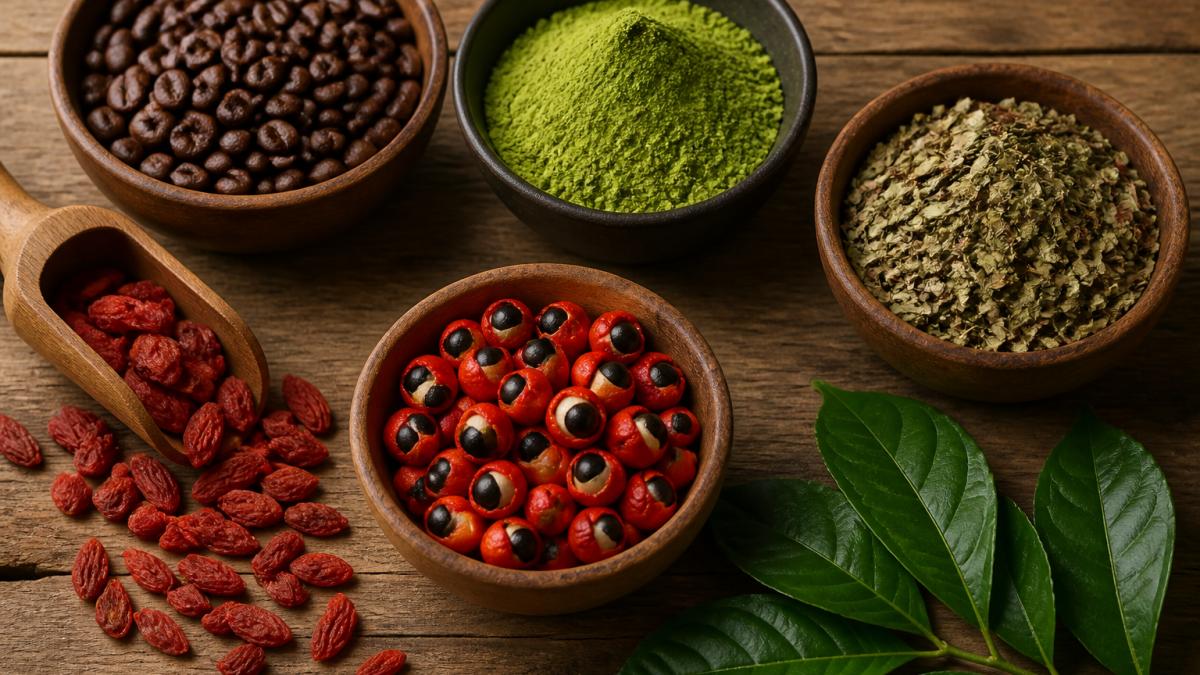
Matcha delivers 25-70mg of caffeine per serving alongside L-theanine in a 1:2 ratio. This amino acid crosses the blood-brain barrier and promotes alpha wave activity, the mental state associated with calm focus. The combination produces alertness without the nervous energy of coffee alone. Matcha also contains catechins, a class of polyphenols with antioxidant and thermogenic properties.
Yerba mate provides 65-196mg of caffeine per 8-ounce serving, depending on steeping time and leaf density. It contains 196 active compounds including saponins, which have anti-inflammatory properties, and xanthines that work synergistically with caffeine for sustained stimulation. The flavor profile is earthy and slightly bitter, very different from coffee or tea.
Guarana is the most caffeine-dense plant source at 40-80mg per gram of dried powder.
| Source | Caffeine per Serving | Key Compounds | Best For |
|---|---|---|---|
| Coffee | 95-200mg | Chlorogenic acid, polyphenols | Daily energy foundation |
| Matcha | 25-70mg | L-theanine, catechins | Calm focus, sustained alertness |
| Yerba mate | 65-196mg | Saponins, xanthines | Sustained stimulation, endurance |
| Guarana | 40-80mg per gram | Tightly-bound caffeine | Extended release, 6+ hour energy |
| Goji berry | <1mg | Polysaccharides, zeaxanthin | Clarity support, antioxidants |
Synergistic stacking works because different sources release caffeine at different rates. Combining guarana's slow release with matcha's L-theanine creates a plateau effect, energy that rises gradually, stays elevated, and declines gently over 6-8 hours instead of spiking and crashing within 3-4 hours.
How to Avoid Caffeine Jitters and Crashes
The jitter-and-crash cycle stems from how quickly caffeine reaches peak plasma concentration in your bloodstream. Synthetic caffeine hits peak levels in 30-60 minutes because it's an isolated molecule with nothing slowing absorption. Natural caffeine, suspended in a plant matrix of fiber, oils, and polyphenols, reaches peak concentration more gradually, typically 45-90 minutes, creating a gentler rise and a slower decline in alertness.
Individual Metabolic Variability: The CYP1A2 Factor
Fast metabolizers (about 50% of the population) clear caffeine in 3-5 hours. They feel alert quickly and crash quickly. A 200mg dose hits hard and leaves hard, often triggering the classic afternoon energy dip.
Managing Withdrawal When Transitioning to Natural Caffeine
A tapering protocol minimizes withdrawal while maintaining productivity:
Week 1: Reduce total daily caffeine intake by 25%. If you're consuming 400mg daily, drop to 300mg. Divide this across your normal consumption windows, don't skip doses entirely, just reduce each one. Most people notice no withdrawal at this level.
Tieman's Medium Fusion Ground →
The Role of L-Theanine and Polyphenols in Sustained Energy
L-theanine and polyphenols aren't just "good additions" to caffeine, they're the compounds that transform caffeine from a stimulant that spikes and crashes into a sustained energy source. Understanding how they work reveals why natural caffeine for sustained energy outperforms synthetic alternatives at the neurochemical level.
L-Theanine: The Caffeine Moderator
L-theanine works through three distinct mechanisms:
GABA production: L-theanine increases gamma-aminobutyric acid (GABA), the brain's primary inhibitory neurotransmitter. GABA counteracts the excitatory effect of caffeine, creating calm alertness rather than nervous stimulation. This is why matcha drinkers report feeling "alert but relaxed", the L-theanine is actively suppressing the anxiety response that caffeine normally triggers.
Polyphenols: The Metabolism Extenders
Polyphenols are plant compounds with antioxidant properties that extend the energy plateau through multiple metabolic pathways. The three most relevant for sustained caffeine energy are chlorogenic acid, catechins, and saponins.
The Synergistic System: Why Natural Caffeine Works Better
When you consume natural caffeine from plant sources, you're not getting isolated caffeine, you're getting a system of compounds that work together to create sustained energy:
- Caffeine blocks adenosine receptors, creating alertness
- L-theanine (if present) increases GABA and promotes alpha waves, preventing anxiety
- Chlorogenic acid slows glucose absorption, stabilizing blood sugar
- Catechins (if present) enhance fat oxidation and extend neurotransmitter activity
- Saponins (if present) moderate cortisol response, preventing stress physiology
The sustained energy from natural caffeine isn't magic, it's biochemistry. You're not just consuming a stimulant, you're consuming a system of compounds that modulate how that stimulant affects your nervous system and metabolism. This is why the same 100mg dose feels completely different depending on whether it comes from synthetic powder or from matcha.
Benefits of Low-Acid Coffee for Clean Energy
Acid in coffee comes from chlorogenic acid and quinic acid. While chlorogenic acid has antioxidant benefits, high levels of quinic acid irritate the stomach lining and trigger acid reflux in sensitive individuals.
Natural Ways to Improve Focus Throughout the Day
Sustained energy requires more than caffeine selection. Your daily routine determines whether natural caffeine for sustained energy actually delivers or whether you crash by mid-afternoon.
Frequently Asked Questions
What is the difference between natural and synthetic caffeine?
Natural caffeine comes from plant sources like coffee beans, tea leaves, and guarana berries, where it occurs alongside polyphenols and antioxidants. Synthetic caffeine is chemically manufactured in a lab. Natural caffeine sources have different bioavailability and metabolic pathways, often producing a smoother energy curve without the sharp spike. The plant compounds that accompany natural caffeine, particularly L-theanine in tea and chlorogenic acid in coffee, moderate adenosine receptor activation and reduce jittery effects.
How can I get sustained energy without a caffeine crash?
Sustained energy comes from slowing caffeine absorption and pairing it with L-theanine, polyphenols, and protein. Choose natural caffeine sources with longer half-lives, like yerba mate or matcha, which release caffeine gradually. Avoid consuming caffeine on an empty stomach, which causes rapid absorption and sharp metabolic spikes. Low-acid coffee formulations reduce stomach irritation and support steadier energy release. Tieman's Medium Fusion and Dark Fusion blends combine 100% Arabica coffee with matcha, rooibos, and goji berry to deliver clean, sustained energy without crashes.
What are the best natural sources of caffeine for long-lasting energy?
Yerba mate and matcha provide sustained caffeine release due to their polyphenol content and slower absorption rates. Coffee beans, particularly Arabica varieties, deliver caffeine alongside chlorogenic acid and antioxidants. Guarana has one of the highest natural caffeine concentrations and releases slowly due to its fiber content. Rooibos, while caffeine-free, pairs well with caffeine sources to enhance stamina and mental clarity. Blended formulations that combine multiple plant sources, like those found in Tieman's Fusion Coffee, create synergistic effects for extended alertness.
How does low-acid coffee support sustained energy levels?
Low-acid coffee reduces stomach irritation and inflammation, allowing for better nutrient absorption and steadier energy delivery. Standard coffee's acidity can trigger digestive discomfort and energy fluctuations, especially in sensitive individuals. Low-acid formulations preserve caffeine content while removing compounds that cause vasoconstriction and metabolic stress. This supports more consistent adenosine receptor activity and prevents the jittery spikes associated with acidic brews. Tieman's low-acid blends are formulated to provide clean energy without digestive interference, making them ideal for individuals with acid reflux or sensitive stomachs.
Can natural caffeine improve mental clarity throughout the day?
Yes. Natural caffeine combined with L-theanine and polyphenols supports cognitive focus by activating neurotransmitters and improving blood flow to the brain. L-theanine promotes alpha-wave activity, enhancing calm alertness without overstimulation. Polyphenols like those in matcha and rooibos provide antioxidant protection that supports long-term cognitive function. The sustained release of natural caffeine prevents the mental fog that follows a crash, maintaining steady mental clarity. Tieman's Fusion Coffee's combination of Arabica coffee, matcha, rooibos, and goji berry delivers multiple mechanisms for sustained focus and endurance.
How much caffeine is in natural sources compared to regular coffee?
A typical 8-ounce cup of brewed Arabica coffee contains 95-200 mg of caffeine depending on brewing method and grind. Matcha contains 25-70 mg per serving, yerba mate 65-196 mg per cup, and guarana 40-90 mg per teaspoon (highly concentrated). The difference isn't just quantity, it's absorption rate and accompanying compounds. Natural sources release caffeine more gradually due to their fiber and polyphenol content, creating steadier energy without the spike-and-crash cycle. Tieman's Fusion blends maintain full caffeine content while adding matcha, rooibos, and goji berry to smooth the delivery curve.