

Table of Contents
- Why Adding Matcha in Coffee Changes Your Energy Entirely
- L-theanine and Caffeine Synergy: The Science Behind Calm Focus
- Antioxidants, Catechins, and What They Do for Your Body
- Low-Acid Coffee Benefits for Sensitive Stomachs
- Matcha Coffee Recipe: How to Build the Perfect Fusion Cup
- Quality Grading and Sourcing: Not All Matcha Is Equal
- Individualized Tolerance Profiles: Who Benefits Most
- Conclusion
Last Updated: August 17, 2026
Why Adding Matcha in Coffee Changes Your Energy Entirely
Traditional coffee delivers energy in a sharp spike followed by an equally sharp drop. Matcha in coffee changes that equation entirely. When you combine the caffeine in coffee with the L-theanine naturally present in matcha, you get steadier, cleaner energy without the cortisol-spiking jolt that leaves you anxious by 10 a.m. and exhausted by 2 p.m.
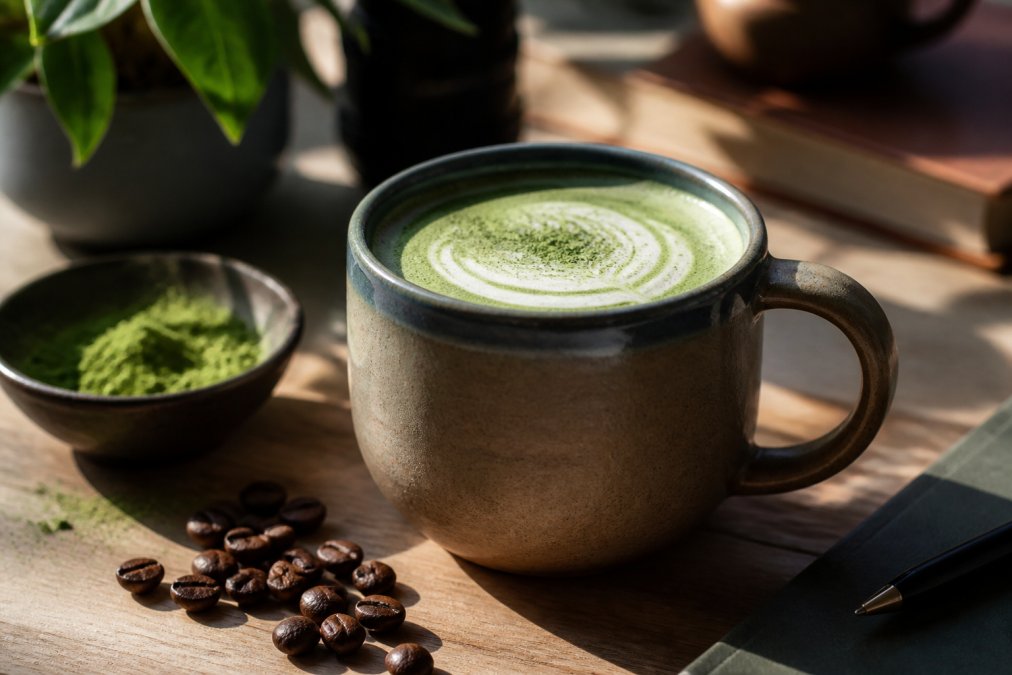
At Tieman's Fusion Coffee, we've built our entire product philosophy around this insight. Matcha is a powdered whole-leaf green tea rich in L-theanine, catechins, chlorophyll, and phytonutrients that standard coffee doesn't contain. Coffee contributes fast caffeine absorption and a familiar ritual. Fusing the two creates something more useful than both.
L-theanine and Caffeine Synergy: The Science Behind Calm Focus
The most important thing to understand about matcha in coffee is the biochemistry. L-theanine is an amino acid found almost exclusively in tea leaves. When consumed alongside caffeine, it modifies how your body processes the stimulant by smoothing its edges. The result is "alert relaxation": heightened cognitive function without agitation.
How L-theanine Modulates Caffeine's Stimulant Effect
Caffeine works by blocking adenosine receptors in the brain and increasing dopamine signaling. But this same mechanism elevates cortisol levels and can trigger the sympathetic nervous system response responsible for jitters, racing heart, and anxiety.
L-theanine counteracts this by promoting alpha brain wave activity, associated with calm, focused mental states, and influences GABA pathways, which have a mild relaxing effect on the nervous system. The two compounds complement each other: caffeine drives alertness, L-theanine shapes the quality of that alertness. According to research published in Nutritional Neuroscience, the combination improves both speed and accuracy on attention-switching tasks more than either compound alone.
The practical implication: you get focus without the edge.
What 'Alert Relaxation' Actually Feels Like
With standard coffee, energy arrives quickly and feels aggressive. With matcha in coffee, the onset is more gradual and the plateau is wider. You settle into a sustained, even state of focus that holds for several hours without hitting a peak and falling off.
People who are caffeine-sensitive often describe this as the first time coffee hasn't made them feel wired. For high-performance individuals, athletes, and anyone who needs sustained concentration, that distinction matters enormously.
Antioxidants, Catechins, and What They Do for Your Body
Matcha is one of the most concentrated sources of antioxidants in the human diet. The dominant compounds are catechins, a class of polyphenols with well-studied effects on oxidative stress and inflammation. The most active catechin is epigallocatechin gallate (EGCG), which has been studied for its role in metabolic rate support, heart health, and neuroprotective effects.
When you add matcha to coffee, you layer these polyphenols on top of coffee's own antioxidant profile. Coffee contains chlorogenic acids and quercetin, both with anti-inflammatory properties. The combination gives you a broader antioxidant spectrum than either drink alone.
According to the USDA's FoodData Central database, matcha contains significantly higher concentrations of catechins per gram than brewed green tea because you consume the whole leaf in powdered form. That bioavailability advantage is meaningful: more active compounds reach your bloodstream.
For wellness-minded professionals, this means reduced oxidative stress over time, better cardiovascular support, and a drink that contributes to your body's natural detoxification pathways rather than just delivering a stimulant.
| Compound | Found In | Primary Benefit |
|---|---|---|
| L-theanine | Matcha | Calm focus, reduced jitters |
| EGCG (catechins) | Matcha | Antioxidant, anti-inflammatory |
| Chlorogenic acids | Coffee | Antioxidant, blood sugar support |
| Quercetin | Both | Anti-inflammatory, heart health |
| Chlorophyll | Matcha | Detoxification support |
| Caffeine | Both | Alertness, metabolic rate |
Low-Acid Coffee Benefits for Sensitive Stomachs
One overlooked reason to try matcha in coffee is what it does to your digestive system. Standard coffee is acidic, with a pH typically between 4.5 and 5.0. For anyone with acid reflux, GERD, or a sensitive stomach, this triggers the lower esophageal sphincter to relax, allowing stomach acid to move upward. Many people have given up coffee entirely because of the acid, not the caffeine.
Matcha has a significantly higher pH than coffee, closer to neutral. When blended into a low-acid coffee base, it raises the overall pH of the beverage, reducing irritation potential. The rooibos component in Tieman's Fusion Coffee adds another layer: it's naturally caffeine-free and alkaline, contributing to a gentler profile.
Many people who eliminated coffee due to acid sensitivity find that a properly formulated low-acid fusion blend is something they can tolerate comfortably. This isn't about compromising on flavor or caffeine content; it's about removing the ingredient causing the problem.
As noted by the American College of Gastroenterology's GERD guidelines, reducing acidic beverage intake is a first-line recommendation for managing reflux symptoms.
Matcha Coffee Recipe: How to Build the Perfect Fusion Cup
The biggest mistake people make when trying matcha in coffee is treating it like an afterthought, a spoonful of powder stirred into hot liquid and left to clump. Done properly, it's genuinely good.
Basic Matcha Coffee Method
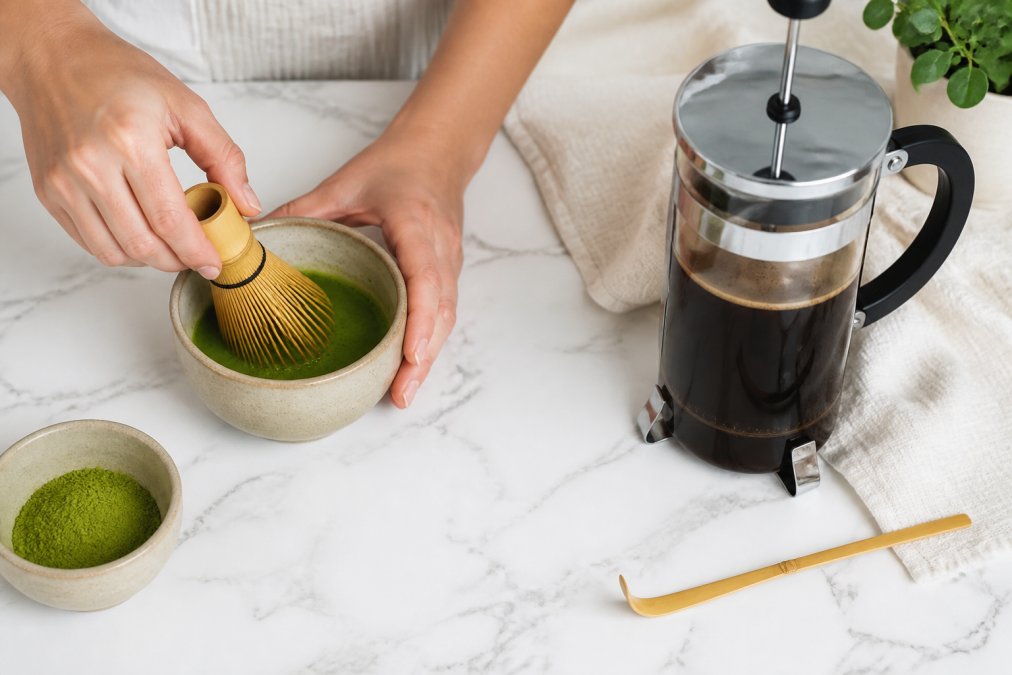
- Brew your coffee base. Use your preferred method. Aim for a medium roast; lighter roasts can clash with matcha's grassy notes, while very dark roasts overpower it.
- Sift your matcha. Use a fine-mesh sieve to remove clumps before adding liquid.
- Whisk matcha with warm water first. Combine roughly half a teaspoon of ceremonial grade matcha with 2 tablespoons of water at around 175°F. Whisk in a "W" motion until frothy.
- Combine. Pour your brewed coffee over the matcha base or add the matcha mixture to your coffee.
- Add milk if desired. Oat milk or whole milk both work well.
Tips for Getting the Flavor Right
The grassy taste that puts some people off matcha is almost always a sourcing or temperature problem.
- Use ceremonial grade, not culinary grade. Culinary matcha is designed for baking. In a drink, it tastes harsh. Ceremonial grade is smoother and more complex.
- Don't skip the pre-whisk. Matcha added directly to hot liquid clumps and releases bitter compounds unevenly.
- Start with less. Half a teaspoon per cup is a good starting point.
- Sweetness helps. A small amount of honey or maple syrup rounds out the bitterness.
If the preparation process is too involved for weekday mornings, a pre-blended fusion coffee that incorporates matcha at the processing stage solves the problem entirely.
Quality Grading and Sourcing: Not All Matcha Is Equal
Matcha quality varies enormously depending on growing region, cultivation method, harvest timing, and processing. The best matcha comes from shade-grown tea plants; the shading forces the plant to produce more chlorophyll and L-theanine, which is why high-quality matcha is a vivid, deep green rather than dull olive.
Ceremonial grade is the highest classification, intended for direct consumption. It has the smoothest flavor, highest L-theanine content, and most vibrant color. Culinary grade is processed for use in recipes where it's one ingredient among many.
For matcha in coffee, ceremonial grade is worth the premium. You're drinking it straight, and the quality difference is immediately obvious in both taste and effect. When evaluating a pre-blended fusion coffee containing matcha, ask whether the matcha component is ceremonial grade and where it's sourced from.
Individualized Tolerance Profiles: Who Benefits Most
Not everyone responds to caffeine the same way. Caffeine metabolism is governed largely by genetics, specifically variants in the CYP1A2 gene, which controls how quickly your liver processes caffeine. Fast metabolizers clear caffeine quickly. Slow metabolizers are more sensitive to smaller amounts and prone to jitters, anxiety, and disrupted sleep.
For slow metabolizers and people with caffeine sensitivity, the L-theanine and caffeine synergy in a matcha-coffee blend is particularly valuable. The L-theanine doesn't reduce total caffeine intake, but it meaningfully reduces the subjective experience of overstimulation. Many people who get shaky hands from a single cup of regular coffee report tolerating a matcha fusion blend much better.
As explained in Harvard T.H. Chan School of Public Health's caffeine overview, individual variation in caffeine sensitivity is significant and should inform how you approach caffeinated beverages.
Who benefits most from matcha in coffee:
- Caffeine-sensitive individuals who want cognitive benefits without overstimulation
- Anyone with acid reflux or GERD looking for a gentler coffee alternative
- Athletes and high-performance professionals who need sustained focus
- Health-conscious consumers who want functional nutrients alongside caffeine
- People who experience energy crashes mid-morning after standard coffee
Who should approach with caution:
- Pregnant women or those breastfeeding (consult a healthcare provider about total caffeine intake)
- People with severe caffeine sensitivity who react to even small amounts
- Anyone on medications that interact with caffeine or green tea catechins
Most people who struggle with traditional coffee are better candidates for a matcha fusion blend than they realize. The combination addresses the two most common complaints, jitters and crashes, at the biochemical level.
Managing energy levels throughout the day is one of the most common challenges for busy professionals, athletes, and parents who rely on coffee but pay for it later with crashes and anxiety. Tieman's Fusion Coffee was built specifically to solve this problem, blending 100% Arabica coffee with ceremonial matcha, rooibos, and goji berry in a low-acid formula that supports clean, sustained energy without the jitters or digestive discomfort of standard coffee. The proprietary fusion process means the matcha is already integrated at the right ratio, no whisking required. Shop Tieman's Fusion Coffee and experience the difference a properly formulated blend makes to your focus, endurance, and daily clarity.
Frequently Asked Questions
Is it good to put matcha in coffee?
Combining matcha with coffee pairs L-theanine from matcha with caffeine from coffee. L-theanine is an amino acid shown to promote calm focus and reduce the overstimulation that caffeine alone can cause. The result is more sustained energy with fewer jitters and a lower risk of an energy crash. The catechins and polyphenols in matcha also add antioxidant value your regular cup of coffee does not provide on its own.
Does adding matcha to coffee reduce caffeine jitters?
Yes, and the mechanism is specific. L-theanine in matcha influences alpha brain wave activity, which promotes a relaxed but alert mental state. When paired with caffeine, it appears to blunt the cortisol spike and overstimulation that cause shaky hands and racing thoughts. People with caffeine sensitivity often report noticeably smoother energy from a matcha-coffee blend compared to straight coffee, though individual tolerance profiles vary and total caffeine intake still matters.
How does the L-theanine in matcha affect coffee's energy profile?
L-theanine and caffeine synergy works by slowing caffeine metabolism slightly and softening its stimulant peak. Instead of a sharp energy spike followed by a crash, the combined effect tends to produce a more gradual release of energy. This supports cognitive function and mental clarity over a longer window. The amino acid also helps keep cortisol levels more stable, which is one reason matcha-coffee blends are popular with athletes and professionals who need consistent focus across long workdays.
Is there a downside to drinking matcha daily?
Matcha is generally safe for daily consumption at moderate amounts, typically one to two servings. Because it contains caffeine, drinking large quantities can contribute to caffeine sensitivity symptoms like disrupted sleep or elevated heart rate. Ceremonial grade matcha also contains fluoride, so very high daily intake over years warrants attention. For most healthy adults, one matcha-coffee blend per day sits well within safe limits. Anyone with specific health conditions should check with their doctor.
This article was written using GrandRanker