

Table of Contents
- Why Antioxidant Morning Drinks Matter for Energy and Focus
- How to Choose the Best Antioxidant-Rich Morning Drinks
- Green Tea Benefits and Why It Works in the Morning
- Rooibos Tea Benefits: A Caffeine-Free Option
- Best Antioxidant Smoothie Recipe for Busy Mornings
- Morning Drinks for Energy: Coffee Blends and Practical Timing
- Evidence Quality and Realistic Health Claims
- Frequently Asked Questions
Last Updated: October 15, 2026
Why Antioxidant Morning Drinks Matter for Energy and Focus
The best antioxidant rich morning drinks are beverages that deliver plant compounds called polyphenols and flavonoids, which help the body manage oxidative stress and support steady energy. This guide from Tieman's Fusion Coffee covers the best options, what the evidence actually supports, and how to time them for a clearer morning.
The case for paying attention is simple. Free radicals build up from normal metabolism, exercise, and environmental exposure, and over time that oxidative stress contributes to inflammation. Plant compounds in tea, berries, and coffee help counter that process.
Below, we break down the best antioxidant-rich morning drinks by category, with serving sizes, caffeine notes, and a smoothie recipe you can make in five minutes.
How to Choose the Best Antioxidant-Rich Morning Drinks
The best antioxidant-rich morning drinks balance three things: plant compound density, caffeine level, and how much sugar you're actually drinking. Get those right and the rest is preference.
A common mistake is choosing based on color alone. Deeply colored drinks usually signal more anthocyanins and flavonoids, but a bright purple bottle can still carry 30 grams of added sugar. Read the label.
Sugar, Calories, and Serving Size
Serving size is where most morning drink choices go wrong. A standard 8-ounce serving of unsweetened green tea has zero calories, while a 16-ounce sweetened juice blend can carry as much sugar as a candy bar. The chart below compares typical unsweetened options.
| Drink | Typical Serving | Added Sugar | Caffeine | Best For |
|---|---|---|---|---|
| Green tea | 8 oz | 0 g | Low | Gentle morning focus |
| Rooibos tea | 8 oz | 0 g | None | Caffeine-free mornings |
| Unsweetened berry smoothie | 12 oz | 0 g | None | Fiber and fullness |
| Pomegranate juice | 8 oz | Varies | None | Polyphenol density |
| Coffee blend | 8 oz | 0 g | Moderate | Sustained energy |
Whole fruit beats juice on fiber every time. If you drink juice, keep it to one small glass and pair it with protein.

Caffeine and Medication Considerations
Caffeine timing matters more than most people think. Caffeine has a half-life of roughly five hours, so a cup at 7 a.m. still has a quarter of its punch left by early afternoon.
If you take medication, check with your pharmacist before adding concentrated green tea or matcha to your routine. Green tea can affect how some drugs are absorbed. Anyone with acid reflux should also note that low-acid coffee options exist precisely for this reason.
Green Tea Benefits and Why It Works in the Morning
Green tea benefits come mainly from catechins, particularly EGCG, a flavonoid studied for its antioxidant activity. A cup also delivers L-theanine, an amino acid that promotes calm alertness alongside a modest caffeine dose.
That combination is why green tea feels different from coffee. The L-theanine smooths the caffeine curve, so you get focus without the sharp spike.
Morning is a good time for it because the caffeine is gentle enough to pair with breakfast. The NIH National Center for Complementary and Integrative Health overview of green tea notes that green tea is generally well tolerated, though concentrated extracts deserve more caution than brewed tea.
For a lower-caffeine start, brew at a lower temperature and steep for less time.
Rooibos Tea Benefits: A Caffeine-Free Option
Rooibos tea benefits center on two things: it's naturally caffeine-free, and it contains aspalathin, a polyphenol found only in rooibos.
The flavor is mild and slightly sweet, with none of the grassiness that puts people off green tea.
This is the drink we'd recommend for an afternoon cup or for anyone cutting caffeine entirely. It won't wake you up, but it supports hydration and delivers plant compounds without a crash later.
Best Antioxidant Smoothie Recipe for Busy Mornings
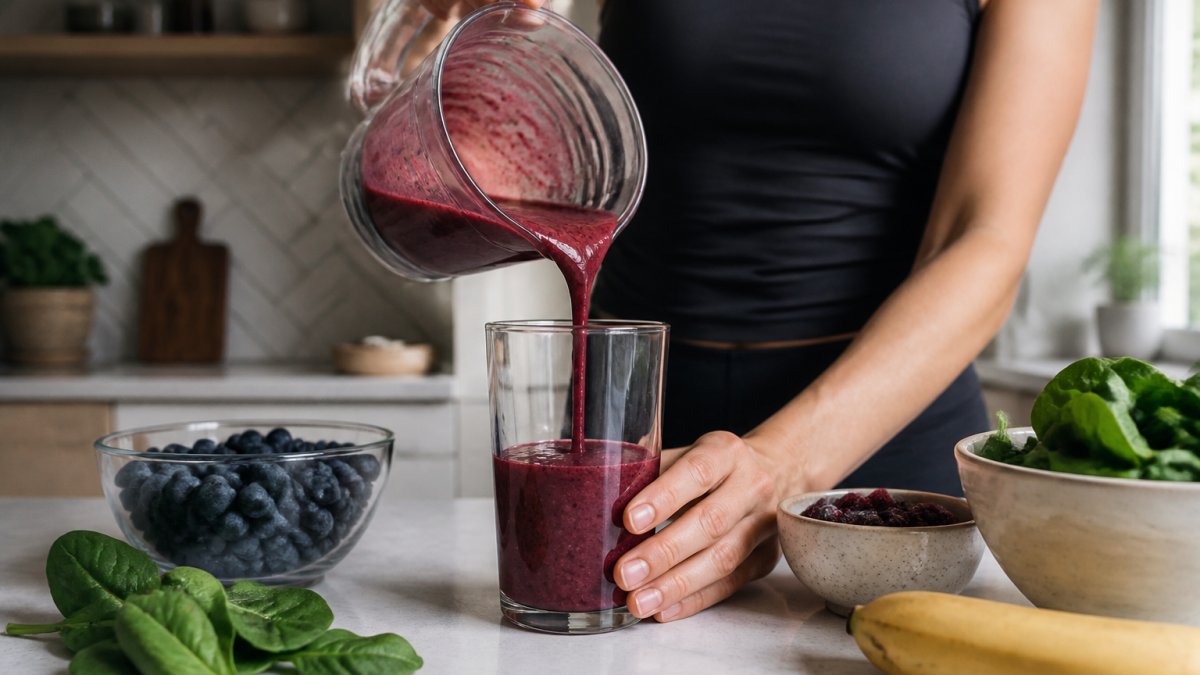
The best antioxidant rich morning drinks include a smoothie recipe for busy mornings that uses frozen berries, a handful of greens, and a liquid base, blended in under five minutes.
The Base Recipe
This makes one 12-ounce serving. Total active time is about 4 minutes, plus 45 seconds of blending.
- 1 cup frozen blueberries or mixed berries
- 1 handful fresh spinach (about 1 packed cup)
- 1/2 cup plain Greek yogurt
- 3/4 cup unsweetened milk or water
- 1 tablespoon ground flaxseed
Add liquids first, then yogurt, then greens, then frozen fruit on top. Blend on low for 15 seconds to break up the fruit, then on high for 30 seconds until smooth. If your blender stalls, stop it, push the contents down with a spatula, and continue.
What One Serving Actually Delivers
Numbers vary by brand and berry mix, so treat these as typical ranges rather than exact values. A 12-ounce serving built on the base recipe lands roughly in this range:
| Nutrient | Typical Amount | Where It Comes From |
|---|---|---|
| Calories | 250-300 | Yogurt, berries, flaxseed |
| Added sugar | 0 g | None, if you skip sweetened yogurt |
| Natural sugar | 18-22 g | Berries and lactose in yogurt |
| Fiber | 8-10 g | Berries, flaxseed, spinach |
| Protein | 15-18 g | Greek yogurt |
| Caffeine | 0 mg | None |
That fiber and protein combination is what separates a smoothie from juice. Juice strips the fiber out and leaves the sugar, which is why a whole-fruit smoothie keeps you full longer than a glass of the same fruit pressed.
Make-Ahead and Timing
You can build the dry and frozen components the night before. Portion the berries, spinach, and flaxseed into a freezer bag or jar and refrigerate the yogurt separately.
If you blend the full smoothie the night before, refrigerate it in a sealed jar and drink it within 24 hours. Shake or stir before drinking, because separation is normal.
Tieman's Dark Fusion - Ground →
Drink it within an hour of waking if you want it to function as breakfast rather than a snack.
Substitution Matrix
Use this matrix to swap ingredients without wrecking the nutrition.
| If You Want | Swap | Watch Out For |
|---|---|---|
| More protein | Greek yogurt to cottage cheese | Texture gets thicker; blend longer |
| Dairy-free | Yogurt to silken tofu | Bland without fruit; add a pinch of salt |
| Lower sugar | Banana out, berries in | Less natural sweetness; add cinnamon |
| More fiber | Add 1 tbsp chia or flax | Needs extra liquid or it turns to paste |
| Caffeine boost | Add 1/2 cup brewed coffee, cooled | Don't add matcha powder |
| Caffeine-free | Use water or oat milk as the base | Thinner texture |
| Nut-free | Swap flaxseed for hemp hearts | Slightly higher fat |
Common Mistakes
Three things ruin a morning smoothie. First, using sweetened yogurt or juice as the base, which can add 15 to 25 grams of sugar before you notice. Second, over-blending greens, which warms the mixture and dulls the flavor. Third, skipping the fat source, which leaves you hungry again within an hour.
Morning Drinks for Energy: Coffee Blends and Practical Timing
Morning drinks for energy work best when caffeine arrives with something that softens the curve. That's the idea behind coffee blended with matcha, rooibos, and goji berry, which is exactly what we do at Tieman's Fusion Coffee.
Our Medium Fusion Ground combines 100% Arabica coffee with matcha green tea, rooibos red tea, and goji berry for a low-acid cup that supports focus without the crash.
Practical timing: drink it within an hour of waking, and stop caffeine by early afternoon so it doesn't interfere with sleep. Pair the cup with protein or fat to slow absorption.
We formulated these blends as coffee first. They're not a green drink.
Evidence Quality and Realistic Health Claims
Evidence quality varies enormously across antioxidant drink claims, and it's worth being honest about that. Most research on polyphenols and catechins comes from observational studies and lab work, not large randomized trials on humans drinking specific beverages. That gap between what a lab dish shows and what happens in a body is the single biggest reason antioxidant marketing outruns the science.
How Antioxidant Content Is Actually Measured
When you see a drink ranked as "high in antioxidants," the number usually comes from one of two lab assays.
Both assays have a well-known limitation: they measure what happens outside a living body.
That is why "this drink has the highest antioxidant score" is not the same claim as "this drink is the healthiest." A pomegranate juice with a strong lab score can still carry more sugar per serving than a cola.
What the Evidence Actually Supports
The realistic claim is modest: antioxidant-rich drinks are a reasonable part of a balanced diet, and they may support heart health, skin health, and healthy aging over time.
Where the evidence is strongest is in the general pattern. Diets high in plant compounds, whole fruit, and unsweetened tea are consistently linked to better long-term outcomes.
Claims that a morning drink will "detox" your body, "boost" your immune system overnight, or "reverse" aging are not supported by the current evidence.
Reading a Label Without Getting Fooled
Three checks cut through most marketing:
- Look at added sugar per serving, not total sugar. Natural sugar from fruit comes with fiber; added sugar does not.
- Check the serving size against what you actually pour. A 16-ounce bottle often holds two servings.
- Ignore front-of-package antioxidant claims unless the back panel lists a specific amount of a specific compound.
The USDA Dietary Guidelines for Americans recommend limiting added sugars, which is the single most useful filter when choosing any morning beverage. For measurement questions, USDA FoodData Central lets you check polyphenol and nutrient content by food.
Our honest take: choose drinks you'll actually make every day, keep added sugar near zero, and don't expect a smoothie to replace sleep or exercise.
Frequently Asked Questions
What are some drinks that are rich in antioxidants?
Coffee blended with matcha, rooibos, and goji berry is a strong option, along with green tea, hibiscus tea, and cold-pressed juices made from blueberries, pomegranate, or cranberries. These drinks contain polyphenols, flavonoids, and anthocyanins that help reduce oxidative stress. Pairing a low-acid coffee blend with a berry smoothie gives you a wider range of plant compounds in one morning.
Is green tea a good antioxidant drink to have in the morning?
Green tea is rich in EGCG and catechins, two antioxidants that support heart health and healthy aging. It also contains L-theanine, which promotes calm focus without jitters. If you want the green tea benefits alongside coffee, a blend that combines both gives you caffeine plus the antioxidant profile of matcha in a single cup.
Can antioxidant-rich drinks help with focus and energy?
They can support focus indirectly by reducing oxidative stress and inflammation, which affect mental clarity. Drinks that combine caffeine with L-theanine, like green tea or a coffee-matcha blend, provide steady energy without the crash. Adding a smoothie with berries and citrus gives you hydration and nutrients that sustain attention through the morning.
What is the best antioxidant smoothie recipe for mornings?
Blend one cup of frozen blueberries, a handful of spinach, and half a banana with ice. This combination delivers anthocyanins, flavonoids, and vitamin C. For extra protein, add a scoop of plain Greek yogurt. The smoothie takes under five minutes and pairs well with a low-acid coffee or rooibos tea.
Is it okay to drink antioxidants every day?
Yes, getting antioxidants from drinks and whole foods daily is generally safe and beneficial. The key is moderation with sugary juices and serving size. Aim for unsweetened teas, low-sugar smoothies, and coffee blends that are rich in plant compounds. Rotating between green tea, rooibos, berry smoothies, and coffee gives you variety without overloading on any single source.
Building a morning routine that supports steady energy is harder than it sounds, especially if regular coffee leaves you jittery or uncomfortable. Tieman's Fusion Coffee was made for exactly that problem, with a low-acid formula, a proprietary fusion of matcha, rooibos, and goji berry, and 100% Arabica coffee in medium, dark, and decaf options. Get started with Tieman's Fusion Coffee and build a morning cup that supports focus, endurance, and clarity without the crash.