

Table of Contents
- What Is Low Acid Coffee and How Does It Work?
- Low Acid Coffee for Acid Reflux: Does It Actually Help?
- Benefits of Low Acid Coffee Beyond Digestive Comfort
- How to Reduce Acidity in Coffee: Methods That Work
- Dark Roast vs. Light Roast: Which Has Less Acid?
- Is Low Acid Coffee Worth the Cost?
- Conclusion
Last Updated: August 23, 2026
What Is Low Acid Coffee and How Does It Work?
Low acid coffee is coffee that has been processed, roasted, or brewed in ways designed to reduce its naturally occurring acids. The term "low acid coffee" refers to products where the titratable acidity, the total amount of acidic compounds, has been minimized compared to standard coffee. This matters because coffee naturally contains chlorogenic acid and other compounds that can trigger digestive discomfort in sensitive individuals.
The science behind low acid coffee involves understanding what makes coffee acidic in the first place. Coffee beans contain chlorogenic acid, which breaks down during roasting into quinic acid and caffeic acid. These compounds lower the pH of brewed coffee, making it acidic. Different bean origins, roasting profiles, and brewing methods all affect final acidity levels. A darker roast typically has lower chlorogenic acid content than a light roast because the extended heat breaks down more of these compounds (peer-reviewed research). Cold brewing also reduces acidity naturally since cold water extracts fewer acidic compounds than hot water.
Tieman's Fusion Coffee takes a different approach by blending 100% Arabica coffee with matcha, rooibos, and goji berry. This proprietary fusion process creates a naturally lower-acid beverage while maintaining the coffee experience. The added botanicals contribute their own antioxidants and minerals, which can help buffer stomach acidity and support digestive comfort.
The key distinction is that low acid coffee isn't just marketing, it's a measurable difference in chemical composition. When you brew coffee at lower temperatures or for shorter extraction times, you get fewer acidic compounds in your cup. When you choose beans that have been specially processed or roasted to reduce chlorogenic acid, you're making a real change to what you're consuming.
Low Acid Coffee for Acid Reflux: Does It Actually Help?
Whether low acid coffee actually helps with acid reflux depends on individual sensitivity and the severity of your condition. For people with mild to moderate acid reflux or GERD (gastroesophageal reflux disease), switching to low acid coffee often provides noticeable relief. The reduced acidic load means less irritation to the stomach lining and lower likelihood of triggering reflux symptoms.

The mechanism is straightforward: regular coffee with high titratable acidity stimulates gastric acid production and can relax the lower esophageal sphincter, the muscle that prevents stomach contents from flowing back up (peer-reviewed research). Low acid coffee triggers this response less aggressively. However, individual gut microbiome variance means that some people experience relief while others see minimal difference. Your personal digestive chemistry, stomach sensitivity, and the severity of your reflux condition all play roles.
What matters most is testing this personally. Many people with GERD report that they can tolerate low acid coffee without triggering symptoms, whereas regular coffee causes immediate heartburn or regurgitation. The reduction in chlorogenic acid and other acidic compounds means less chemical irritation to an already-sensitive digestive tract. Some individuals find they can return to their morning coffee routine with low acid options after having eliminated coffee entirely.
It's important to understand that low acid coffee is not a cure for GERD or acid reflux disease. If you have severe reflux, dietary changes alone won't resolve the underlying condition. However, as a practical adjustment that allows you to enjoy coffee without exacerbating symptoms, low acid coffee delivers real value for many people. The key is managing expectations: this is symptom management, not treatment.
Benefits of Low Acid Coffee Beyond Digestive Comfort
Beyond helping with acid reflux, low acid coffee offers several other advantages that appeal to wellness-focused consumers. The first is sustained energy without the jitters. Regular coffee's high caffeine concentration combined with acidic compounds can create a spike-and-crash pattern that leaves you feeling shaky or anxious. Low acid coffee, especially formulations like Tieman's Fusion Coffee that blend coffee with complementary botanicals, provides more stable energy throughout the day.
The antioxidant profile is another significant benefit. Coffee is already rich in antioxidants, but when you add matcha, rooibos, and goji berry to the blend, you're increasing the concentration of polyphenols and other protective compounds. These antioxidants support overall cellular health and may contribute to better focus and mental clarity. Athletes and high-performance professionals often seek beverages that support endurance and cognitive function, low acid coffee blends deliver on both fronts.
Digestive health extends beyond just managing reflux. A gentler coffee experience means less stress on your entire gastrointestinal system. People with sensitive stomachs who previously had to eliminate coffee entirely often find that low acid options allow them to reintroduce the beverage without triggering stomach upset or bloating. This matters for quality of life: your morning routine doesn't have to mean choosing between comfort and caffeine.
The reduced acidity also means less erosion of tooth enamel over time. Regular coffee's acidity contributes to enamel degradation, particularly if you're drinking multiple cups daily. Switching to low acid coffee protects your teeth while maintaining your coffee habit. For busy professionals and parents juggling multiple demands, this is one less health concern to manage.
How to Reduce Acidity in Coffee: Methods That Work
There are several practical methods to reduce acidity in your coffee at home, ranging from simple adjustments to your brewing routine to choosing specific bean types or processing methods.
Brewing Temperature and Extraction Time
The temperature at which you brew coffee directly affects how many acidic compounds end up in your cup. Hot water extracts more chlorogenic acid and other acids than cooler water. If you brew at lower temperatures, around 195-200°F instead of the standard 200-205°F, you'll reduce acid extraction (peer-reviewed research). This requires a bit more attention to your brewing process, but the difference is measurable.
Extraction time matters equally. The longer coffee grounds sit in contact with water, the more acids dissolve into your brew. A standard drip coffee maker extracts for about 4-6 minutes. If you shorten this to 3-4 minutes by using a finer grind and hotter water, you can reduce total extraction time while maintaining flavor. Conversely, very long extraction times, like those in some French press methods, pull out more acids along with other compounds.
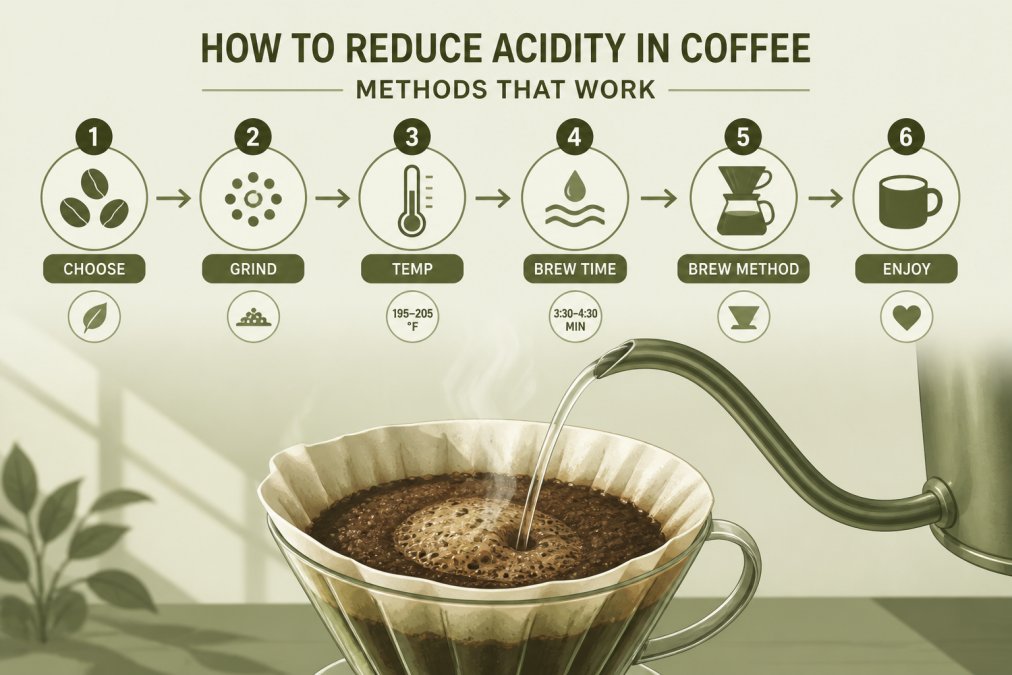
One practical approach is to use a timer and track your results. Brew your usual coffee at your current temperature and time, then experiment with reducing extraction time by 30-60 seconds. Most people find they can shorten extraction without noticing a significant flavor difference, but with a noticeable reduction in stomach irritation.
Cold Brew vs. Low Acid Beans
Cold brewing is one of the most effective methods for reducing acidity. Cold water extracts far fewer acidic compounds than hot water, even over extended steeping periods. A cold brew steeped for 12-24 hours at room temperature or in the refrigerator will have significantly lower titratable acidity than hot-brewed coffee. The trade-off is time, you need to plan ahead, but the result is a naturally low acid coffee concentrate that you can dilute with water or milk.
The difference between cold brew and low acid beans is important to understand. Cold brew is a brewing method that reduces acidity regardless of which beans you use. Low acid beans, on the other hand, are specific varieties or processing methods that start with lower acid content. You can combine both approaches: use low acid beans in a cold brew setup for maximum acidity reduction.
Choosing bean origin also influences acidity. Beans from certain regions, particularly those grown at higher altitudes with specific soil compositions, naturally contain less chlorogenic acid. Brazilian and Sumatra beans tend to be lower in acid than Ethiopian or Kenyan beans. If you're selecting beans specifically for low acidity, ask your coffee supplier about origin and processing method. Many specialty roasters now label their beans with acidity levels, making selection easier.
Dark Roast vs. Light Roast: Which Has Less Acid?
Dark roast coffee has less acid than light roast coffee. This is a consistent, measurable difference. During the roasting process, heat breaks down chlorogenic acid into other compounds. The longer the roasting time, the more chlorogenic acid is reduced. A dark roast that's been roasted for 13-15 minutes will have significantly lower chlorogenic acid content than a light roast roasted for 8-10 minutes.
The flavor profile changes with roasting level, which is why some people prefer light roasts despite higher acidity. Light roasts preserve more of the bean's origin characteristics and subtle flavors. Dark roasts develop deeper, more bitter notes as the sugars caramelize and break down. If you're choosing between light and dark primarily for acidity reduction, dark roast wins. If you're trying to balance flavor preference with digestive comfort, a medium roast offers a middle ground, lower acid than light, but more origin flavor than dark.
"dark roast" isn't standardized across all roasters. One company's dark roast might be slightly lighter than another's medium roast. If acidity reduction is your priority, ask your roaster for their darkest available option and inquire about chlorogenic acid content if they test for it. Specialty coffee roasters increasingly measure and disclose acidity levels, making it easier to compare options.
Is Low Acid Coffee Worth the Cost?
The value question hinges on what you're getting for your money and whether the benefits justify the price difference from standard coffee. Low acid coffee typically costs more than conventional options because of specialized processing, sourcing, or blending. The question isn't whether it's expensive, it's whether the benefits deliver enough value to make that premium worthwhile.
For people with acid reflux or GERD who previously eliminated coffee entirely, low acid coffee is genuinely worth the investment. If you've been living without your morning coffee for months or years because regular coffee triggered symptoms, the ability to return to that ritual, even at a higher price point, has real quality-of-life value. You're not just paying for coffee; you're paying for digestive comfort and the ability to participate in a daily habit that matters to you.
For athletes and high-performance professionals seeking sustained energy without crashes or jitters, low acid coffee blends like Tieman's Fusion Coffee offer measurable benefits. The combination of coffee with matcha, rooibos, and goji berry creates a more stable energy curve than coffee alone. If you're already investing in supplements or specialty beverages to support focus and endurance, low acid fusion coffee fits naturally into that category.
The cost-benefit calculation shifts if you're simply curious about low acid coffee without specific digestive issues. If regular coffee doesn't bother you, the premium price becomes harder to justify based on digestive comfort alone. You might still choose it for the antioxidant profile or the flavor of a fusion blend, but you're paying primarily for preference rather than necessity.
Consider also the total cost of your coffee routine. If you're currently buying specialty coffee drinks at cafés multiple times weekly, switching to low acid coffee at home might actually reduce your total spending while improving your results. A bag of quality low acid beans brewed at home typically costs less per cup than café purchases, even accounting for the premium over standard grocery store coffee.
| Consideration | Standard Coffee | Low Acid Coffee |
|---|---|---|
| Acidity Level | High | Low |
| Digestive Comfort | May trigger reflux | Gentler on stomach |
| Energy Pattern | Spike and crash | Sustained |
| Antioxidant Content | Moderate | Higher (with botanicals) |
| Tooth Enamel Impact | More erosion over time | Less erosion |
| Price Point | Lower | Higher |
The worth of low acid coffee ultimately depends on your personal situation. If you have acid reflux or GERD and have missed your morning coffee, low acid options provide real value that justifies the premium. If you're seeking sustained energy and better focus without the jitters, the investment makes sense. If your digestive system tolerates regular coffee without issue, the extra cost is harder to defend unless you specifically prefer the flavor or antioxidant profile.
At Tieman's Fusion Coffee, we've designed our low acid blends specifically for people who need digestive comfort without sacrificing the coffee experience. Our proprietary fusion of 100% Arabica coffee with matcha, rooibos, and goji berry delivers clean, sustained energy while supporting focus and endurance throughout your day. Whether you choose medium, dark, or decaf, you get the same commitment to low acid formulation and naturally occurring antioxidants and minerals.
The real question isn't whether low acid coffee is worth it in the abstract. It's whether it's worth it for your specific needs, your budget, and your daily routine. Test it personally. Buy a small quantity, brew it carefully, and observe how your body responds. For many people, that first week of symptom-free coffee enjoyment answers the question definitively.
Frequently Asked Questions
Is low acid coffee better for GERD?
Low acid coffee can reduce GERD symptoms for many people by minimizing gastric acid stimulation. Chlorogenic acid and other compounds in regular coffee trigger acid production; low acid formulations contain less of these irritants. However, individual tolerance varies based on gut microbiome and stomach sensitivity. If you have severe GERD, start with small amounts and monitor your response. Consult your doctor if symptoms persist.
Does low acid coffee taste different than regular coffee?
Low acid coffee often tastes smoother and less bitter than standard brews. Dark roasts and cold brew methods produce naturally milder flavors. Blended formulas like those combining coffee with matcha or rooibos add complexity and earthiness. Some drinkers find the taste preferable; others miss the bold intensity of traditional coffee. Taste is subjective, try a small amount first to see if it matches your preferences.
How much caffeine is in low acid coffee compared to regular coffee?
Caffeine content depends on the brewing method and bean type, not acidity level. Dark roasts contain slightly less caffeine than light roasts due to longer roasting. Cold brew typically has more caffeine per serving because of extended steeping. Low acid blends with added ingredients like matcha may contain additional caffeine or adaptogens that affect how your body processes it. Check product labels for exact caffeine amounts if you're sensitive to stimulants.
How long does it take to notice a difference with low acid coffee?
Most people notice reduced heartburn or stomach discomfort within 3-7 days of switching to low acid coffee, especially if they previously experienced acid reflux after regular coffee. Energy and focus improvements may take 1-2 weeks as your body adjusts to the blend's ingredients and caffeine profile. Results vary based on individual digestive health, the severity of your acid sensitivity, and how consistently you use the product. Keep a simple log of symptoms to track your personal response.
This article was written using GrandRanker