

If you love the ritual of a morning cup but your stomach does not, low acid coffee may be the gentle fix you have been looking for. It is coffee grown, processed, or formulated to deliver less of the compounds that bother sensitive drinkers. This guide explains how it works, who it helps, and how to choose the right bag, whether you shop online or in a store.
Last Updated: September 29, 2026
Why Buy Low Acid Coffee Online?
Shopping for low acid coffee online gives you access to blends you will rarely find on a grocery shelf. In addition, you can read roast levels, ingredient lists, and sizing before you buy. For anyone with a sensitive stomach, that transparency matters more than brand recognition.
What Is Low Acid Coffee and How Is It Made?
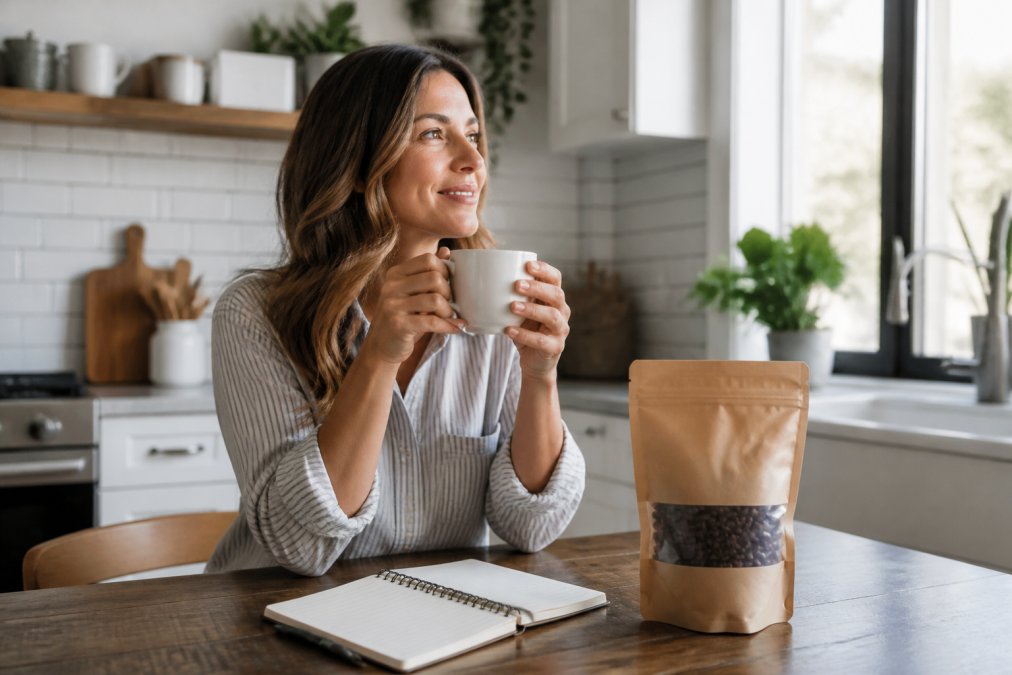
Low acid coffee is coffee that has been grown, processed, or roasted in a way that reduces the natural acids responsible for stomach irritation. Every coffee bean contains chlorogenic acid and other compounds that give it brightness and bite. The trick is lowering those compounds without flattening the flavor. For a shorter primer, read low acidity coffee: what it is and how to choose.
The Chemistry, in Plain Terms
Coffee's acidity comes from several compounds. Chlorogenic acids are the ones most often linked to stomach irritation. Citric and malic acids add bright, fruity notes, while acetic acid brings a vinegar-like sharpness. Most brewed coffee lands around pH 4.85 to 5.10. By comparison, black tea sits near pH 5, orange juice near 3.5, and water at 7. You can read more about chlorogenic acid if you enjoy the science.
How Roasters Actually Reduce Acidity
Acidity is lowered through a combination of choices. The best results stack several.
- Bean selection: Arabica beans grown at higher altitudes carry less bitterness and a smoother finish. Some cultivars are naturally lower in chlorogenic acid.
- Roast level: Chlorogenic acid breaks down as roasting progresses, so darker roasts contain less of it. Push too far, though, and you trade brightness for ash and bitterness.
- Processing method: Washed coffees are cleaner and brighter. Natural and honey processes can taste sweeter but sharper.
- Steam and water treatment: Some producers use steam or water to pull acids and caffeine from green beans before roasting. This is the same principle behind many decaffeination methods.
- Cold brewing: Cold water extracts fewer acids over a longer steep, so cold brew tastes smoother than the same bean brewed hot.
Why "Low Acid" Is Not a Regulated Term
In the United States, "low acid" is not a legally defined claim the way "organic" is. No federal standard requires a specific pH to carry the label. As a result, the term is only as trustworthy as the roaster behind it. The U.S. Food and Drug Administration oversees food labeling broadly, but it does not set a pH threshold for coffee.
How Tieman's Fusion Coffee Approaches It
Tieman's Fusion Coffee takes a different route. Our blends combine 100% Arabica coffee with a proprietary fusion of matcha, rooibos, and goji berry. The result is a naturally low-acid cup with a smooth finish and no bitter aftertaste. Rather than relying on roast temperature alone, the blend is formulated so the coffee stays the star. To see how whole-food ingredients fit in, explore low acid coffee with whole superfood ingredients.
Low Acid Coffee vs. Regular Coffee at a Glance
The differences are real, but they are often subtle. This quick comparison shows where they show up.
| Factor | Regular Coffee | Low Acid Coffee |
|---|---|---|
| Typical flavor | Bright, tangy, sometimes sharp | Smooth, rounded, less bitter |
| Bean choice | Any origin or grade | Often high-altitude Arabica |
| Processing | Standard roast | Roast, steam, or formulation adjustments |
| Stomach comfort | Can trigger discomfort in some people | Often gentler, though results vary |
Benefits of Low Acid Coffee for Sensitive Stomachs
The main benefit is simple: you can enjoy coffee again without paying for it an hour later. For a deeper walkthrough, see our Coffee Worth It.
Digestive Comfort and Reduced Heartburn
Many coffee drinkers find that traditional coffee triggers heartburn, acid reflux, or general stomach unease. The acids and oils in the bean are common culprits. A low-acid blend reduces those triggers, so the coffee sits comfortably. However, responses differ from person to person, so start with a small cup and notice how you feel.
Antioxidants and Overall Wellness
Coffee is one of the most common sources of antioxidants in the average diet. Our Dark Fusion blends are packed with naturally occurring antioxidants from the coffee itself plus the matcha, rooibos, and goji berry in the fusion. Rooibos is naturally caffeine-free and rich in minerals. Goji berry adds its own antioxidants.

Can Coffee Increase Blood Pressure? What You Need to Know
Coffee can raise blood pressure temporarily, particularly in people who do not drink it regularly. The caffeine causes a short-term spike that fades as your body builds tolerance. For most healthy adults, the effect is modest and short-lived. Still, if blood pressure is a concern, watch your caffeine intake. Low acid coffee does not change caffeine content, so a decaf option may suit you better.
Tieman's Fusion Coffee Review: Best Low Acid Coffee Online
For most people shopping for low acid coffee online, Tieman's Fusion Coffee is the strongest option. The blend itself is formulated to be gentle, not just roasted darker and labeled "smooth." Every bag starts with 100% Arabica coffee and adds matcha, rooibos, and goji berry for a naturally low-acid cup with clean energy. Here is how the lineup breaks down.
Tieman's Medium Fusion Ground
This is our best-selling blend and the one we recommend to first-time buyers. Medium Fusion pairs smooth Arabica coffee with matcha, rooibos, and goji berry for balanced flavor and clean energy without the crash. At $11.99 for a 10oz bag, it is the easiest entry point into low acid coffee.
Tieman's Dark Fusion - Ground
Bold and full-bodied with the depth of a classic French roast, yet never bitter. Dark Fusion brings natural antioxidants from the coffee plus the matcha, rooibos, and goji blend. It is smooth, low acid, and built for strong-coffee drinkers. It is also $11.99 for 10oz.
Tieman's Dark Fusion - Wholebean
This is the same bold Dark Fusion profile, sold as whole beans for anyone who grinds fresh at home. Grinding right before brewing preserves more oils and aroma. It costs $11.99 for a 10oz bag.
Tieman's Medium Fusion Ground →
Tieman's Semi-Dark DECAF Fusion - Ground
All the flavor, none of the caffeine. Our Decaf Fusion uses a natural water decaffeination process that preserves the taste and integrity of the Arabica coffee. Blended with matcha, rooibos, and goji, it delivers calm energy and antioxidants. It costs $12.99 for 10oz.
Office Coffee Options
If you are stocking a breakroom, the office packs come in 18 (2oz) ground bags designed for commercial brewers. Medium Fusion Office runs $38.47, and Dark Fusion Office runs $42.75. Each portion pack delivers a clean, low-acid brew.
6-Pack Bundles
For regular drinkers, the 6-packs cut the per-bag cost and mean fewer reorders. Medium Ground, Dark Ground, and Dark Whole Bean all run $71.94 per case of six 10oz bags. The Semi-Dark Decaf 6-Pack runs $77.94.
Full Lineup Comparison
| Product | Roast | Format | Price | Best For |
|---|---|---|---|---|
| Medium Fusion Ground | Medium | 10oz ground | $11.99 | Everyday balanced cup |
| Dark Fusion Ground | Dark | 10oz ground | $11.99 | Bold flavor, antioxidants |
| Dark Fusion Wholebean | Dark | 10oz whole bean | $11.99 | Fresh grinding at home |
| Semi-Dark DECAF Fusion | Semi-Dark Decaf | 10oz ground | $12.99 | Caffeine-sensitive drinkers |
| Medium Office Pack | Medium | 18 (2oz) bags | $38.47 | Workplace brewers |
| Dark Office Pack | Dark | 18 (2oz) bags | $42.75 | Offices wanting bold roast |
| Medium Ground 6-Pack | Medium | 6 x 10oz | $71.94 | Regular home drinkers |
| Dark Ground 6-Pack | Dark | 6 x 10oz | $71.94 | Bold roast loyalists |
| Dark Whole Bean 6-Pack | Dark | 6 x 10oz | $71.94 | Home grinders, bulk |
| Semi-Dark Decaf 6-Pack | Semi-Dark Decaf | 6 x 10oz | $77.94 | Decaf households |
How to Choose the Right Low Acid Coffee for You
Start with your stomach, not your taste buds. The blend that sits comfortably is the one you will actually drink every day.

A Step-by-Step Decision Framework
Work through these steps in order. Each answer narrows the field.
- Gauge your sensitivity. If standard coffee causes immediate discomfort, start with a medium or dark roast and consider decaf first. If your sensitivity is mild, a medium roast is usually safest.
- Decide how much caffeine you want. Choose regular blends for morning energy and decaf for evenings. Caffeine and acidity are separate variables, so you can dial one down without giving up the other.
- Pick ground or whole bean. Whole bean stays fresher if you own a grinder, while ground is faster and works in any brewer. If a bag lasts two weeks, ground is fine. If it takes a month, whole bean holds up better.
- Match the size to your pace. One bag every week or two means a 6-pack makes sense. Slower drinkers should buy singles so nothing goes stale.
- Consider the workplace. Office packs solve the breakroom problem in one order.
Match the Brew Method to the Bean
How you brew changes how acidic the cup tastes, even with the same bag.
- Cold brew: This is the lowest-acid option. Steep coarse grounds in cold water for 12 to 18 hours, then strain. Dilute the concentrate to taste.
- French press: Full immersion keeps more oils in the cup, which some sensitive drinkers find harsher. Use a coarser grind and a shorter steep.
- Drip: It is convenient and consistent. A medium grind and paper filter trap some oils and fine particles, so the cup tastes cleaner.
- Pour-over: This is similar to drip but with more control. A paper filter helps, and slightly cooler water extracts fewer acids.
- Espresso: It is concentrated and often more acidic per ounce. If you love espresso but are sensitive, a darker roast helps.
Read the Label Like a Skeptic
Because "low acid" is not a regulated term, the label is where you separate marketing from method. Look for these details:
- A named roast level. "Dark" or "medium" tells you something. "Smooth" tells you nothing.
- Bean origin and variety. Single-origin and high-altitude Arabica are easier to evaluate than a vague "premium blend."
- Processing method. Washed, natural, and honey all behave differently in the cup.
- Third-party certifications. Organic and fair trade seals are verifiable. A house-designed badge is not.
- A roast date, not just a best-by date. Freshness affects flavor more than most shoppers realize.
Does Low Acid Coffee Taste Different?
Usually yes, but in a pleasant way. Expect less tang and a rounder, smoother finish. Some drinkers miss the bright snap of a light roast. Others prefer the mellow profile right away. A single small bag is the easiest way to find out.
The DIY Route: Make Any Coffee Lower Acid
If you already have a favorite bag, you do not have to replace it to drink gentler coffee. Cold brewing the same beans noticeably reduces perceived acidity. Likewise, adding a paper filter to your drip routine traps some oils and compounds that bother sensitive stomachs. Browse more tips in our Tieman's journal.
When to Talk to a Doctor
If you have been diagnosed with GERD, acid reflux, or another digestive condition, coffee choices are one small variable among many. Low acid coffee is not a treatment, and no bag substitutes for medical advice. The National Institute of Diabetes and Digestive and Kidney Diseases offers trustworthy information on digestive health. Treat any coffee change as a comfort adjustment, not a cure.
Conclusion
Low acid coffee lets you keep your morning ritual without the discomfort. Remember the key points: the term is unregulated, so read labels closely. Roast, bean, processing, and brew method all shape the cup. In addition, a gentler blend is a comfort choice, not a medical treatment. Tieman's Fusion Coffee was built for people who want clean, sustained energy, no jitters or crashes, and a smooth cup that supports focus all day.
Frequently Asked Questions About Low Acid Coffee
What brand of coffee has the least acid?
Tieman's Fusion Coffee offers low acid coffee by combining 100% Arabica with matcha, rooibos, and goji berry. Acid levels vary by brand and are rarely published. For the least acid, look for coffees that explain their processing and use Arabica beans, which are naturally lower in acidity than Robusta.
What is the best coffee for an acidic person?
A low-acid blend made from Arabica beans is a good place to start. Tieman's Medium Fusion Ground is a popular, smooth choice. Cold brew also reduces acidity, and a dark roast can help because roasting breaks down some acids. Consider decaf if caffeine triggers symptoms.
Does low-acid coffee taste different than regular coffee?
It can, but not in a bad way. Tieman's Fusion Coffee has a smooth finish with nutty undertones and chocolate notes. Some people find low-acid coffee less bright or tangy, while many prefer its smoother, less bitter profile. Try a small bag to see what you enjoy.
How is low-acid coffee processed?
Methods vary. Some brands use steam treatment to reduce chlorogenic acid. Others choose high-altitude Arabica, longer roasts, or a formulation approach. Tieman's combines 100% Arabica with matcha, rooibos, and goji berry. Cold brew also lowers acidity through extended, cool steeping.
Can drinking low-acid coffee help prevent heartburn?
It can help many people. Regular coffee may trigger acid reflux, while low acid coffee is generally gentler. However, individual responses vary, so start with a small amount and monitor your symptoms. It is not a treatment for any condition.
Is dark roast always lower in acid?
No. Darker roasts contain less chlorogenic acid, but bean quality and processing also matter. A poorly made dark roast can still upset a sensitive stomach.
Is cold brew a good low acid coffee option?
Yes. Cold water extracts fewer acids during a long steep, so cold brew usually tastes smoother than the same beans brewed hot. It is an easy way to lower acidity at home.
