

Table of Contents
- Matcha Coffee Caffeine: The Short Answer
- Caffeine Content Comparison: Matcha Coffee vs. Standard Brews
- What Determines Caffeine Levels in Your Cup?
- How to Avoid Coffee Jitters and Energy Crashes
- The Benefits of Matcha Infused Coffee for Daily Focus
- Low Acid Coffee Benefits for Sensitive Stomachs
- Decaf Matcha Coffee and Caffeine Sensitivity
- Final Thoughts on Matcha Coffee Caffeine
- Frequently Asked Questions
Last Updated: September 6, 2026
If you are asking how much caffeine is in matcha coffee, the short answer depends on the ratio of coffee to matcha in your cup, but a standard blended serving typically lands between 80 and 120 milligrams. This guide from Tieman’s Fusion Coffee breaks down the exact numbers, what shifts them, and how to get steady energy without the crash.
The key metric to remember is that a standard 8-ounce cup of brewed coffee contains roughly 95 milligrams of caffeine, while a single teaspoon of matcha powder delivers about 60 to 70 milligrams. When you combine both, you are stacking stimulants.
Matcha Coffee Caffeine: The Short Answer
Matcha coffee is a blended beverage that combines brewed coffee with matcha powder, and its total caffeine content typically ranges from 90 to 140 milligrams per 8-ounce serving depending on the proportions used. A typical homemade cup using one shot of espresso and one teaspoon of matcha lands near 130 milligrams. The real difference is not just the total amount but how the caffeine behaves in your body, thanks to the amino acid L-theanine found naturally in matcha.
The L-theanine promotes a state of calm alertness that softens the sharp spike and sudden drop associated with coffee alone. If you are sensitive to caffeine, starting with a smaller matcha portion or a blend designed with lower overall caffeine is a practical first step.
Caffeine Content Comparison: Matcha Coffee vs. Standard Brews
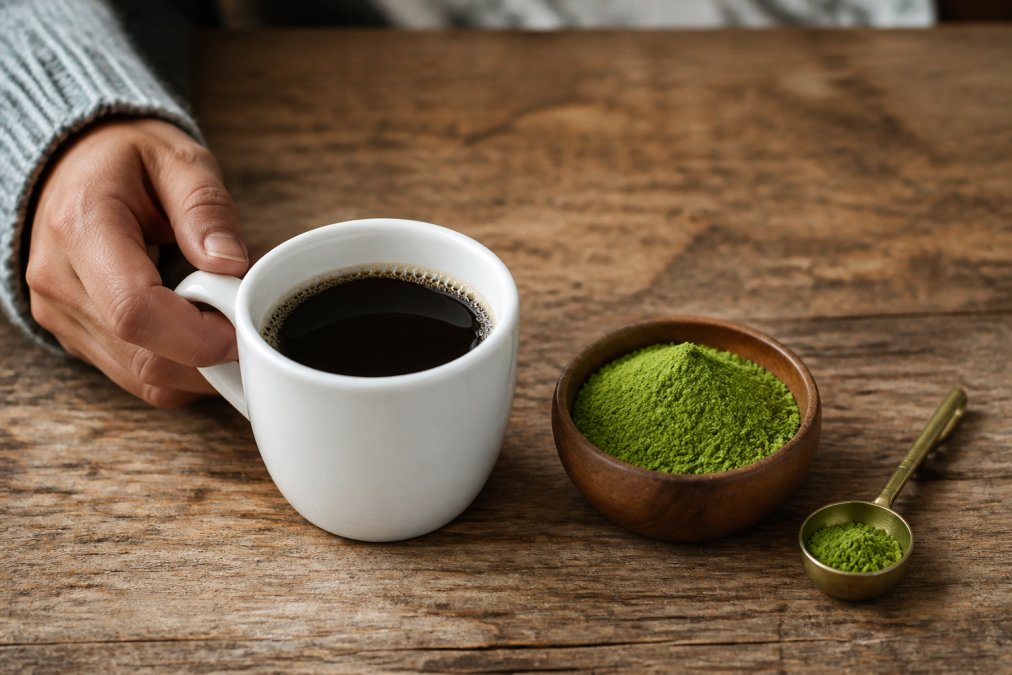
A standard 8-ounce cup of drip coffee contains approximately 95 milligrams of caffeine, while a single espresso shot holds about 63 milligrams (fdc.nal.usda.gov). Matcha prepared traditionally with one teaspoon of powder delivers roughly 60 to 70 milligrams, though this varies with the grade and harvest time of the tea leaves.
| Beverage | Serving Size | Approximate Caffeine | Primary Effect |
|---|---|---|---|
| Drip Coffee | 8 oz | 95 mg | Quick spike, possible crash |
| Espresso Shot | 1 oz | 63 mg | Rapid absorption |
| Traditional Matcha | 1 tsp powder | 60-70 mg | Gradual, sustained focus |
| Matcha Coffee Blend | 8 oz | 90-140 mg | Balanced, jitter-free energy |
Caffeine absorption slows when L-theanine is present, which is why many drinkers report steadier energy from matcha coffee than from coffee alone.
What Determines Caffeine Levels in Your Cup?
Several factors shift the caffeine content in your matcha coffee, and most of them are within your control.
Matcha Grade and Harvest Timing
The grade of matcha matters less for total caffeine than most people assume. Ceremonial grade contains roughly 60 to 70 milligrams of caffeine per teaspoon, nearly identical to culinary grade. The real difference is flavor quality and the concentration of L-theanine, which tends to be higher in ceremonial grades because the younger leaves are shaded longer before harvest.
Quantity: The Most Underrated Variable
Because caffeine density per gram is similar across grades, the single biggest lever you control is how much powder you use. A standard traditional serving is one teaspoon, or about 2 grams. Many coffee drinkers use a heaping tablespoon out of habit, which can push caffeine to 120 milligrams or more from the matcha alone. Weighing your matcha portion once with a kitchen scale removes the guesswork: 2 grams is the sweet spot for most adults.
Water Temperature and Caffeine Extraction
Water temperature directly affects how much caffeine and how many bitter catechins end up in your bowl. Brewing matcha at 175°F, the traditional recommendation, extracts caffeine steadily while leaving behind the harsh, astringent compounds that dominate at boiling. If you want a lower-caffeine version, whisking matcha at 160°F rather than 175°F reduces extraction noticeably while preserving the vegetal sweetness. The same principle applies to your coffee base: cooler water around 195°F extracts less caffeine from grounds than water at 205°F.
Steeping Time and Leaf Structure
Unlike loose-leaf tea where you discard the leaves, matcha is the entire leaf ground into powder, so there is no steeping step to shorten. Every speck of caffeine in the leaf ends up in your cup. This is why matcha contains more caffeine per serving than most steeped green teas, which typically deliver 25 to 35 milligrams per cup. Your coffee brewing method matters similarly: a longer steep time in a French press or cold brew concentrate pulls more caffeine from the grounds than a quick pour-over.
The Bottom Line on Variables
If you want to estimate your cup's caffeine, start with the coffee base and add the matcha portion. One espresso shot at 63 milligrams plus one teaspoon of matcha at 65 milligrams lands near 128 milligrams. Swap the espresso for a half-caff shot and you drop to roughly 95 milligrams. Reduce matcha to half a teaspoon and you shave another 30 milligrams.
How to Avoid Coffee Jitters and Energy Crashes
The classic advice for avoiding coffee jitters is to eat before drinking, but the more effective strategy is changing what is in your cup. Caffeine sensitivity varies widely between individuals, and some people feel shaky from as little as 50 milligrams. Pairing caffeine with L-theanine, as found in matcha, is one of the most researched ways to reduce jittery side effects while keeping alertness high.
Drinking matcha coffee before 10 a.m. aligns with your body's natural cortisol rhythm, and avoiding caffeine within eight hours of bedtime protects sleep quality. If you are prone to anxiety or a racing heart, try alternating matcha coffee with plain matcha or herbal tea across the week to lower your average daily caffeine intake.
The Benefits of Matcha Infused Coffee for Daily Focus
The benefits of matcha infused coffee go beyond simple alertness, because the combination delivers caffeine alongside catechins and L-theanine. Catechins, particularly EGCG, are antioxidants that support cellular health, while L-theanine increases alpha brain wave activity associated with relaxed focus.
Sustained focus is the primary advantage over drinking coffee alone. The caffeine in coffee peaks in your bloodstream within 30 to 45 minutes, while matcha's caffeine releases more gradually due to its binding to tea compounds.
Low Acid Coffee Benefits for Sensitive Stomachs
For anyone managing acid reflux or GERD, low acid coffee benefits are substantial, since traditional coffee can irritate the stomach lining and relax the esophageal sphincter. Matcha is naturally less acidic than coffee, which makes it a gentler base for sensitive digestive systems. Blending matcha with a low-acid coffee, such as Tieman’s Fusion Coffee's 100% Arabica formula, reduces the total acid load while preserving the ritual of a morning brew.
Darker roasts produce less acid than light roasts because the roasting process breaks down chlorogenic acid, and cold brewing further lowers acidity. If you have previously given up coffee due to stomach pain, a matcha coffee blend made with low-acid beans offers a path back to daily enjoyment without the burning discomfort.
:::takeaway The combination of shade-grown matcha and low-acid Arabica coffee creates a cup that is easier on the stomach than standard coffee while still delivering the focus and energy you expect from your morning routine.
Decaf Matcha Coffee and Caffeine Sensitivity
Decaf matcha coffee exists, but the reality check is more nuanced than a simple yes or no.
The Decaffeination Process: What Actually Happens
Coffee beans are typically decaffeinated using one of three methods: the Swiss Water Process, the carbon dioxide method, or ethyl acetate processing. The Swiss Water Process, which uses only water and activated charcoal filters, is the most common premium method and removes about 97 percent of caffeine. That means a standard 8-ounce cup of decaf coffee still contains roughly 2 to 5 milligrams of caffeine, not zero, but negligible for most people.
Matcha decaffeination is far less standardized. True decaffeinated matcha is rare because the process damages the delicate leaf structure and strips away some of the catechins and L-theanine. Most commercial decaf matcha is produced using a supercritical carbon dioxide extraction, which removes caffeine while preserving more of the polyphenols, but even this method leaves residual caffeine in the range of 5 to 10 milligrams per teaspoon.
Why Decaf Matcha Coffee Is a Practical Compromise
For highly sensitive individuals, those who feel jittery from 50 milligrams or less, even decaf matcha coffee may not be fully stimulant-free. A better approach is understanding your personal threshold and building a cup that stays under it.
Caffeine Sensitivity: The Metabolic Reality
Caffeine sensitivity is not a single switch but a spectrum shaped by genetics, liver enzyme activity, and habitual intake. The CYP1A2 gene determines how quickly your liver metabolizes caffeine, and about half the population carries a slow-metabolizing variant that keeps caffeine in the bloodstream longer (PubMed). If you are unsure which group you fall into, a simple test is to drink a standard cup of coffee at 8 a.m. and note whether you feel any stimulation after 2 p.m.
Practical Adjustments for Sensitive Drinkers
If you are prone to anxiety, a racing heart, or sleep disruption, consider these adjustments:
- Start with a quarter-teaspoon of matcha rather than a full teaspoon, and measure your coffee base as a half-caff blend.
- Time your intake earlier. Caffeine has a half-life of roughly five hours, so a 4 p.m. cup still leaves 25 milligrams active at 9 p.m. for slow metabolizers (peer-reviewed research).
- Pair with food. Protein and fat slow gastric emptying, which flattens the caffeine absorption curve and reduces the sharp spike that triggers anxiety in sensitive individuals.
- Alternate days. If you drink matcha coffee daily, your body upregulates adenosine receptors, which means you need more caffeine to feel the same effect and experience withdrawal headaches when you skip a day. Building in two caffeine-free days per week resets your sensitivity.
The Bottom Line on Decaf and Sensitivity
Decaf matcha coffee is a viable option for reducing caffeine without eliminating the ritual, but it is not a zero-caffeine beverage. The most reliable way to manage sensitivity is to know your personal threshold, measure your portions precisely, and choose a blend that gives you control over both the coffee and matcha components.
Final Thoughts on Matcha Coffee Caffeine
Matcha coffee delivers a meaningful caffeine dose, typically between 90 and 140 milligrams per serving, but its real value is in how the energy feels. The L-theanine from matcha tempers the sharp edges of coffee, producing focused alertness without the jitters or crash. Your ideal serving depends on your caffeine sensitivity, your stomach tolerance, and whether you are drinking it for morning wake-up or sustained afternoon work.
If you want the benefits of both coffee and matcha without the guesswork, a formulated blend removes the need to measure and mix yourself. Tieman’s Fusion Coffee combines 100% Arabica beans with matcha, rooibos, and goji berry in a low-acid formula designed for clean energy and digestive comfort, available in medium, dark, and decaf roasts. Get started with Tieman’s Fusion Coffee and experience steady focus that lasts through your whole day.
Frequently Asked Questions
Is matcha as high in caffeine as coffee?
No, not gram for gram. A standard 8-ounce cup of brewed coffee contains roughly 80-100 milligrams of caffeine. A single 1-gram serving of pure matcha powder has about 30-40 milligrams. However, matcha coffee blends combine both, so the total depends on the ratio of coffee to matcha in your specific product or preparation method.
Does matcha cause the same jitters as traditional coffee?
Matcha generally produces fewer jitters than coffee for most people. This is because matcha contains L-theanine, an amino acid that promotes calm alertness and slows caffeine absorption. When you drink plain coffee, caffeine enters your bloodstream quickly, which can cause a spike and crash. The combination in matcha coffee can still cause jitters if your total caffeine intake is high, so monitor portion sizes.
What are the benefits of blending matcha with coffee?
Blending matcha with coffee combines the rapid alertness of coffee with the sustained, calm energy of matcha's L-theanine. This combination can support smoother focus for work or exercise. If you choose a low-acid coffee blend, you get the benefits of matcha infused coffee without the stomach irritation that regular coffee can cause.
Does matcha provide a different type of energy than coffee?
Yes, the energy profiles differ. Coffee delivers a quick spike in alertness that peaks within 30 to 60 minutes and often fades into a crash. Matcha provides a steadier release due to its caffeine binding with L-theanine, which promotes sustained focus and alertness over several hours without the sudden drop. This makes matcha a popular choice for extended work sessions or endurance activities.